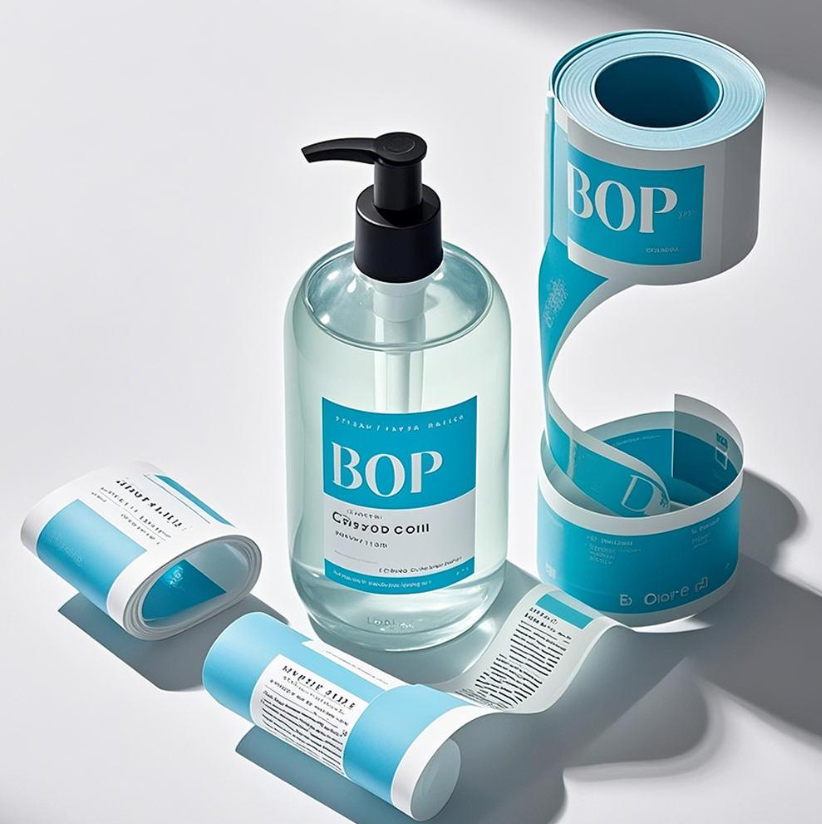
Inkjet Label Paper vs. Inkjet Vinyl Labels: Which Should Wholesale Buyers Choose?
Choosing between inkjet label paper and inkjet vinyl labels is not simply a matter of comparing prices. The two materials have different surface properties, durability characteristics, and application requirements. For wholesalers, importers, and commercial printing businesses, the right choice depends on the end-use environment, printer and ink compatibility, required appearance, and total supply cost.
As a starting point, paper labels are worth evaluating for many indoor labeling and packaging applications, while suitable film labels may be a better fit when moisture resistance, flexibility, or tear resistance is important. The exact performance depends on the product construction and grade.
What Is the Difference Between Inkjet Label Paper and Inkjet Vinyl Labels?
Inkjet label paper uses a paper facestock designed for a specified printing process, while inkjet vinyl labels use a synthetic film facestock, or another specified film material, with a printable surface treatment.
Both can be supplied as self-adhesive label materials, but their facestock, coating, adhesive, and release liner can differ. These components affect printing performance, converting behavior, application suitability, and the finished label’s appearance.
| Comparison factor | Inkjet label paper | Inkjet vinyl or film labels |
|---|---|---|
| Facestock | Paper with a surface suitable for the specified printing process | Synthetic film, such as PP or PET, with a suitable printable surface |
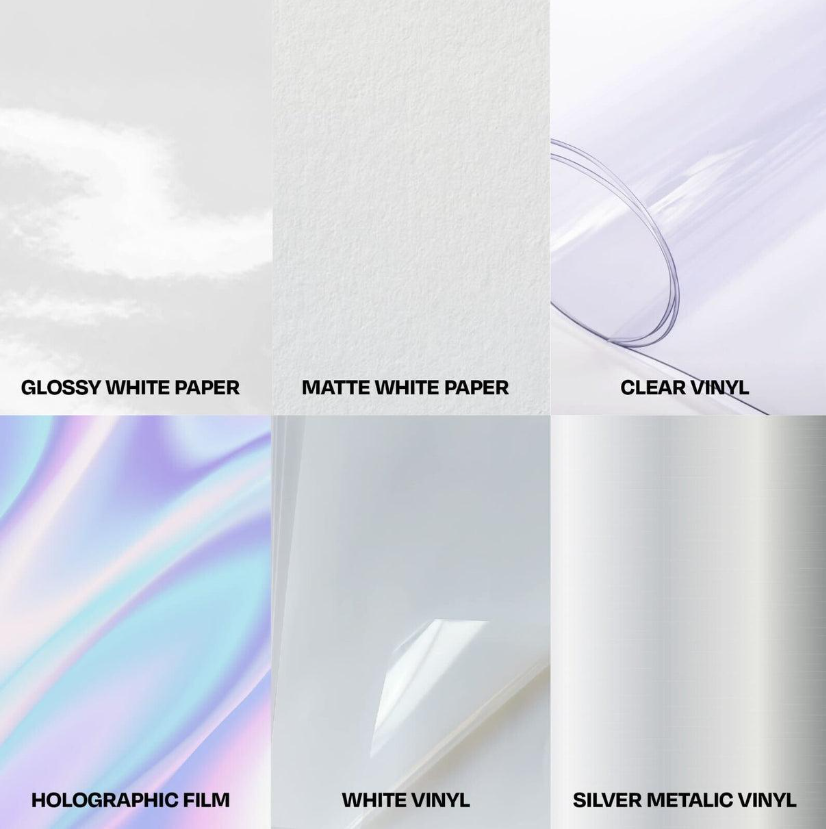
| Surface options | May include matte, semi-gloss, and glossy finishes | May include matte, glossy, and transparent finishes, depending on the material |
| Typical evaluation focus | Print appearance, paper handling, and suitability for indoor applications | Moisture exposure, tear resistance, flexibility, transparency, and surface compatibility |
| Printing compatibility | Depends on coating, ink, printer, and product grade | Depends on film treatment, ink, printer, and product grade |
| Suitable applications | Indoor product labels, packaging labels, office labels, and other compatible uses | Applications that may require film characteristics, such as selected cosmetic, product, or moisture-exposed labels |
| Key purchasing risk | Assuming all coated papers work with every inkjet printer | Assuming all film labels are waterproof or compatible with every inkjet system |
These are general material-selection guidelines, not universal performance guarantees. Always confirm the specification of the exact product you intend to purchase.
Explore Koalapaper Label Materials
Compare paper-based and film-based options for your target application.
When Should Buyers Choose Inkjet Label Paper?
Inkjet label paper is a practical starting point when the target application prioritizes printed appearance, a paper-based finish, and compatibility with the intended inkjet workflow.
When print appearance is the main priority
Paper label materials are available in different surface finishes. Glossy paper can provide a reflective appearance, while matte paper offers a less reflective surface. Semi-gloss and specialty finishes can serve markets with different presentation requirements.
The right choice depends on the artwork, label size, text density, and the appearance expected by the end customer. Buyers should compare printed samples rather than relying on finish names alone.
For example, glossy inkjet label paper for product packaging may be worth evaluating when vivid graphics and a glossy presentation are priorities. Printer and ink compatibility should be confirmed for the selected grade.
When the application is mainly indoors
Paper labels can be considered for indoor product identification, retail packaging, office organization, and other applications where the material is not routinely exposed to demanding moisture or handling conditions.
However, the application environment still matters. A label placed on a frequently handled package may face different demands from one used for temporary indoor identification.
If a label may encounter condensation, spills, outdoor exposure, or repeated abrasion, do not assume that a paper label will perform adequately simply because it has a coated surface. Evaluate the complete label construction and consider whether a suitable film material is more appropriate.
When buyers need multiple paper finishes or formats
Product ranges may include matte, glossy, semi-gloss, and specialty paper facestocks, with different weights and sheet formats. Availability varies by supplier and grade.
For distributors, a well-selected range can serve customers with different appearance requirements without introducing unnecessary product complexity. Before adding a new SKU, confirm its dimensions, adhesive option, liner construction, printer compatibility, and available packaging.
When Should Buyers Consider Inkjet Vinyl or Film Labels?
Film labels are worth evaluating when the application requires properties that a particular paper grade may not provide. The word “vinyl” is sometimes used loosely in the market, so buyers should verify whether the actual facestock is PVC, PP, PET, or another material.
When moisture or tearing is a concern
Some film label materials offer better moisture resistance and tear resistance than conventional paper labels. The actual performance depends on the film, adhesive, ink system, surface treatment, and construction.
For example, inkjet PP labels for applications requiring a film facestock may be worth evaluating when the intended use calls for a synthetic material. Selected PET labels may also be suitable for applications where transparency is important.
Do not treat “film” as a guarantee of waterproof performance. The printable surface, adhesive, printed ink, and final application all need to be evaluated together.
When transparent labels are required
Transparent film labels can support a clear-label appearance on compatible packaging. This may be useful for selected bottles, containers, and product presentation applications.
The required transparency, background color, surface curvature, and visibility of printed content should all be considered. A transparent facestock does not automatically mean that the finished printed label will have the required clarity or opacity.
Buyers should request samples and assess the actual printed result on the intended container or packaging surface.
When the label must conform to a particular surface
Flexible film materials may be worth considering for some curved or squeezable containers. However, conformability depends on the film type, thickness, adhesive, container geometry, and application process.
Before placing a bulk order, test the label on the actual packaging. Check edge lifting, wrinkles, adhesion, and appearance after application. A material that works well on a flat carton may not behave the same way on a curved bottle.
Need a Film Label for a Specific Application?
Review the available PP and PET label options and confirm the material, printing technology, and adhesive requirements for your use case.
How Do You Compare Printing Compatibility?
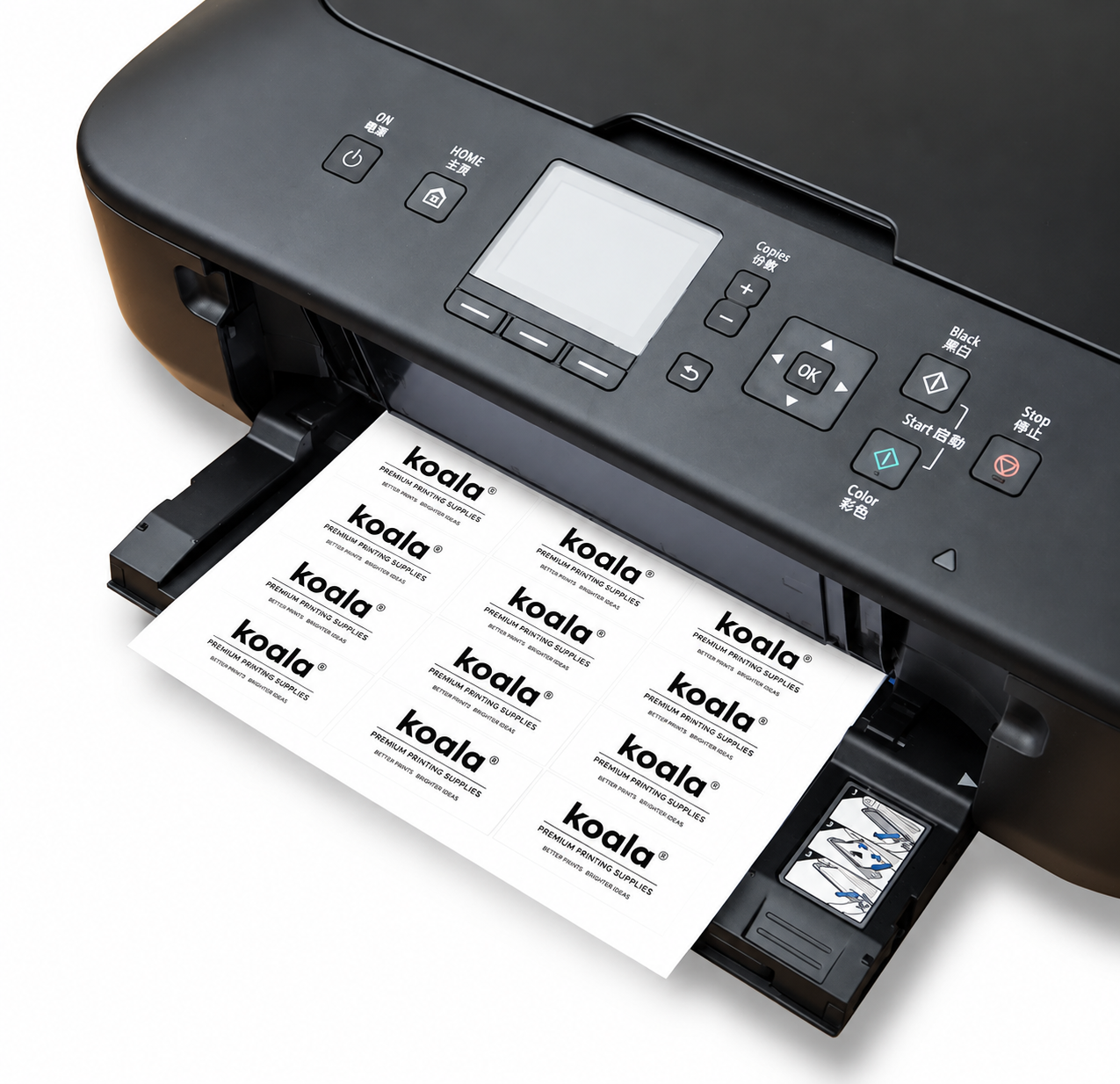
Neither paper nor film labels should be selected based on the material name alone. Buyers need to confirm that the specific label grade is designed for the intended printer and ink system.
Check the printing technology first
Inkjet label materials are not automatically interchangeable with laser-printable labels or thermal-transfer materials. Coating and surface treatment affect how ink interacts with the facestock.
Before approving a product, confirm:
- The exact printer technology supported by the product.
- Whether the specified grade is suitable for dye ink, pigment ink, or both.
- Whether pigment compatibility is full, partial, or limited to specific printer models.
- The recommended print settings and any special handling instructions.
- Whether the printed label meets the required image quality and drying expectations.
For example, Koalapaper lists different compatibility details for its paper label and film label ranges. These details should be checked against the current specification for the exact grade rather than generalized to the entire product category.
Run a controlled sample test
Use the intended printer, ink, print settings, and artwork to compare candidate materials. Evaluate image sharpness, color appearance, smudging, drying behavior, and feeding performance.
For film labels, also check whether the printed surface has the required resistance to handling and the intended environmental conditions. If a claim such as waterproof or abrasion-resistant is important, define the test method and acceptance criteria before approving the material.
What About Adhesive, Liner, and Converting Requirements?
The facestock is only one part of a self-adhesive label. Adhesive and liner selection can be just as important to the finished product’s performance.
Adhesive selection
Adhesion depends on the adhesive formulation, application temperature, surface energy, surface cleanliness, and the shape of the object. An adhesive that performs well on a flat paper carton may not deliver the same result on a curved plastic bottle.
Buyers should specify the target surface and whether the label needs permanent or removable adhesion. If the product will be exposed to moisture, temperature changes, or repeated handling, test those conditions as part of qualification.
Release liner and converting
The liner supports the label material before application and must work with the intended dispensing or converting process. For die-cut labels, confirm the required label shape, spacing, liner behavior, and sheet or roll format.
For larger orders, buyers should also discuss dimensional tolerances, packaging, and any requirements for slitting or die-cutting. These details can affect production efficiency and the usability of the finished labels.
How Can Wholesale Buyers Make the Right Choice?
The best purchasing decision is the one that meets the application requirements while keeping product complexity and total cost under control. Use the following checklist when comparing suppliers.
| Buyer question | Why it matters |
|---|---|
| What surface will the label be applied to? | Adhesion and conformability depend on the substrate. |
| Will the label face moisture, abrasion, or outdoor exposure? | Helps determine whether a paper or suitable film construction should be evaluated. |
| Which printer and ink will be used? | Confirms that the grade is suitable for the actual printing workflow. |
| What finish or transparency is required? | Narrows the available facestock options. |
| Is the label supplied in sheets or rolls? | Affects printing, converting, storage, and application. |
| Is custom sizing or die-cutting required? | Helps establish tooling, production, and order requirements. |
| What is the target order quantity? | Supports quotation, packaging, and supply planning. |
| What tests or documents are required? | Aligns supplier evaluation with the buyer’s quality process. |
Compare the landed cost, not just the unit price. Include packaging, freight, waste during printing or converting, and any additional testing or processing required for the intended application.
Why Should You Request Samples Before a Bulk Order?
Sample testing helps confirm that the selected material works in the buyer’s real production environment. It also provides a reference point for supplier discussions and repeat orders.
A practical qualification process is to:
- Confirm the product code and current technical data sheet.
- Print the same artwork on each shortlisted material.
- Apply the labels to the intended packaging surface.
- Evaluate print quality, adhesion, edge lifting, and handling.
- Test any required moisture or abrasion resistance using agreed conditions.
- Record the approved product grade and acceptance criteria before ordering in bulk.
Do not assume that a test on one facestock, adhesive, or printer automatically validates another combination. The exact construction and intended use should be documented.
Which Label Material Should You Source for Your Market?
Inkjet label paper and inkjet film labels serve different needs, so neither is the right choice for every customer. Paper labels can be a sensible option for compatible indoor applications where surface finish and printed presentation matter. Suitable PP or PET film labels deserve consideration when the application requires film-specific properties such as flexibility, transparency, or improved resistance to moisture and tearing.
For wholesalers and importers, the next step is to match the target application to a specific product grade, confirm printer and ink compatibility, and validate performance through samples.
Looking for a Label Material Supplier?
Share your target application, printer model, material requirements, dimensions, and estimated order quantity with Koalapaper to help identify suitable options.
FAQ
What is the main difference between inkjet label paper and inkjet vinyl labels?
Inkjet label paper uses a paper facestock, while inkjet vinyl or film labels use a synthetic material. The right choice depends on printing compatibility, appearance, application conditions, and required material performance.
Are inkjet vinyl labels waterproof?
Not automatically. Moisture resistance depends on the film, printable surface, ink, adhesive, and overall construction. Confirm the specific product’s claims and test it under the intended conditions.
Can inkjet label paper be used with pigment ink?
Some grades support pigment ink fully or partially, while others may be designed primarily for dye ink. Check the current technical data sheet and test the exact grade with your printer.
Are PP labels and PET labels the same?
No. PP and PET are different film materials with different physical properties. The suitable choice depends on the label’s application, required appearance, surface, and performance criteria.
What should wholesale buyers test before ordering labels in bulk?
Test printer compatibility, print quality, drying behavior, adhesion, edge lifting, handling, and any required moisture or abrasion resistance. Use the intended packaging surface and document the approved product grade.
What information should I provide when requesting a label quotation?
Provide the application, printer and ink system, material preference, finish, label size, sheet or roll format, adhesive requirements, order quantity, packaging needs, and destination market.