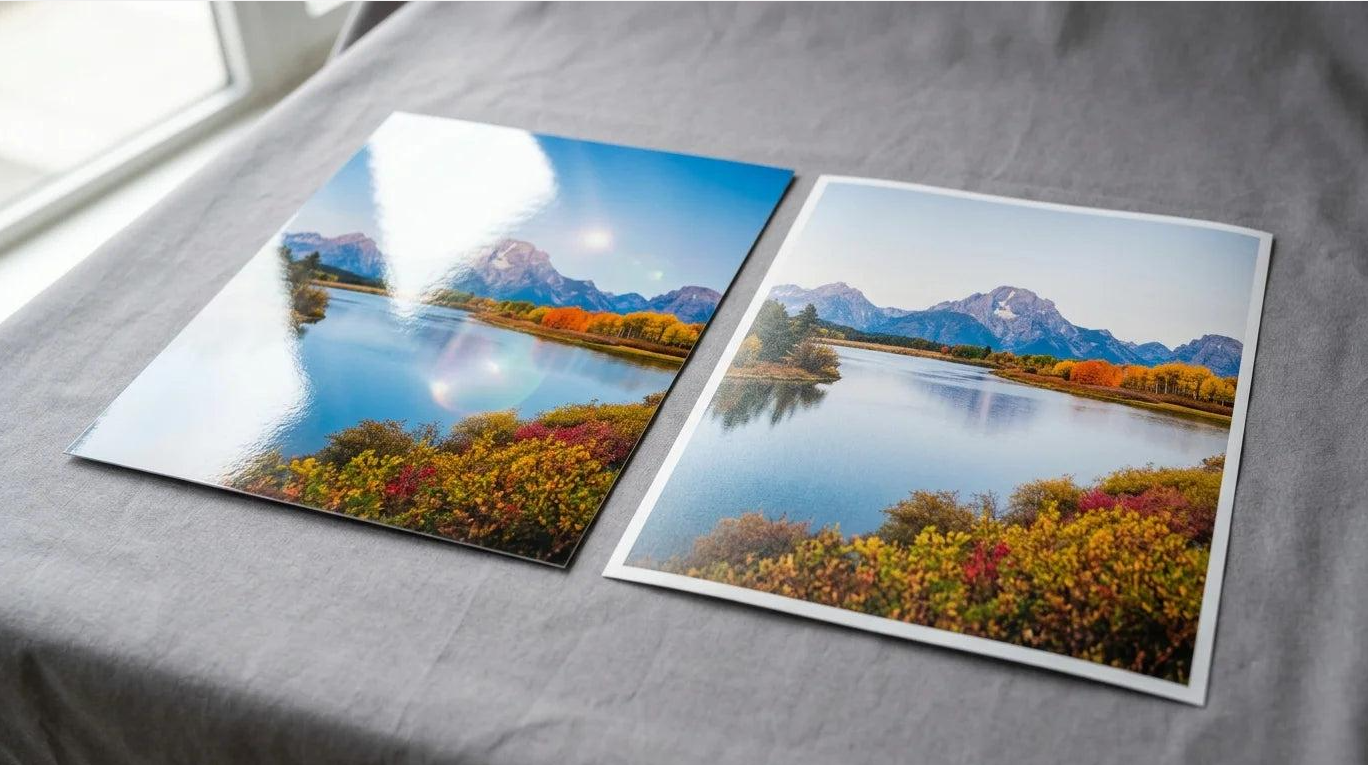
RC photo paper is an inkjet printing medium built on a resin-coated paper base, typically with an ink-receiving coating on the printable side. RC stands for resin coated. The resin layer helps separate the paper core from moisture in the printing process, while the receiving coating is designed to accept ink and reproduce photographic images.
Compared with conventional coated photo paper, RC photo paper is commonly selected for professional photo printing because of its smooth surface, photographic appearance, and resistance to moisture. Its performance still depends on the specific coating, ink system, and product construction.
For wholesalers and distributors, RC photo paper is more than a premium-looking paper category. It is a product range that can serve different customer segments, from photo labs and professional studios to commercial print providers and retailers.
1. What Is RC Photo Paper and Why Is It Used for Professional Printing?
RC photo paper is widely used for professional photo prints, portrait photography, wedding albums, photo books, exhibition prints, decorative displays, indoor promotional graphics, and personalized photo products.
When evaluating an RC photo paper supplier, buyers should look beyond the word “RC” and compare the actual construction, surface finish, weight, ink compatibility, and available formats.
2. How Does RC Photo Paper Differ from Cast Coated Photo Paper?
RC photo paper and cast coated photo paper use different base and coating constructions, which influence their printing characteristics and suitable applications.
| Comparison factor | RC photo paper | Cast coated photo paper |
|---|---|---|
| Base construction | Resin-coated paper base | Paper base with cast coating |
| Surface | Commonly glossy, satin, luster or other finishes | Commonly glossy or matte, depending on product |
| Typical positioning | Professional and higher-grade photo printing | Everyday and cost-conscious printing |
| Moisture resistance | Designed to provide improved moisture resistance | Depends on coating and product construction |
| Print performance | Depends on coating, ink and printer settings | Depends on coating, ink and printer settings |
| Buyer consideration | Finish, consistency, ink compatibility and durability | Cost, target application and required print quality |
The right choice depends on the end market. Buyers supplying photo studios, album producers, and professional print businesses may prioritize RC photo paper. Customers focused on economical everyday printing may prefer a suitable cast coated option.
For wholesalers, the important question is not which paper is universally better, but which product matches the customer’s application and price expectations.
Compare Koalapaper’s RC photo paper range with its glossy inkjet photo paper options when building a product portfolio.
3. Which RC Photo Paper Surface Should You Choose?
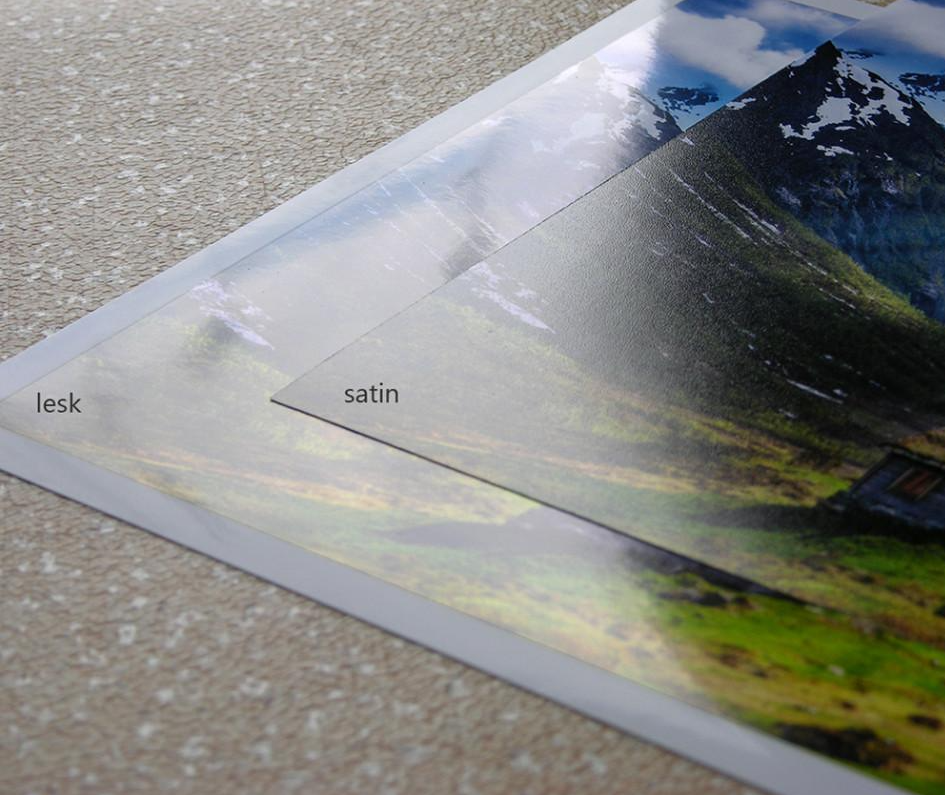
The surface finish changes how a printed image looks under different lighting conditions and how customers perceive the final product. Glossy and satin are two common options, while some product ranges also include luster or textured finishes.
Glossy RC photo paper
Glossy RC photo paper has a reflective surface that helps images appear bright and visually vivid. It is often selected for portrait prints, photo albums, promotional photographs, and applications where strong color impact is important.
It may be suitable for customers who prioritize bright, high-impact photographic images, a smooth and reflective surface, and a traditional glossy photo-print appearance. However, glossy surfaces can reflect surrounding light, so buyers serving exhibition or display applications should consider the lighting environment.
Satin RC photo paper
Satin RC photo paper provides a softer sheen than a high-gloss finish. It can help reduce the visual impact of direct reflections while retaining a photographic appearance.
It is often considered for portrait and wedding photography, photo albums, portfolios, decorative prints, and professional image presentations.
Luster and textured finishes
Some RC photo paper ranges offer luster or textured finishes. These surfaces can create a distinctive visual and tactile effect, making them useful for specialized photography and display requirements. The exact texture and appearance vary by manufacturer, so buyers should request physical samples rather than relying only on finish names or product photographs.
Buyer tip: When comparing RC photo paper finishes, evaluate the same image printed on each surface. Check color appearance, reflection, texture, and handling under the lighting conditions where the final prints will be viewed.
4. How Does GSM Affect RC Photo Paper Selection?
GSM refers to grams per square meter and indicates the paper’s basis weight. In RC photo paper, GSM is an important purchasing parameter because it influences the paper’s feel, stiffness, and positioning in the market.
A higher GSM value often corresponds to a heavier sheet, but it does not automatically mean better print quality. The base paper, resin layers, coating, and total construction also affect the final product.
For example, Koalapaper’s published RC photo paper range includes models from 190 to 300 g/m², with different surface finishes and product formats.
| Buyer requirement | What to evaluate |
|---|---|
| Everyday photo printing | Balance between handling, print quality and selling price |
| Premium photo products | Sheet feel, stiffness, surface finish and image presentation |
| Photo albums | Flexibility, thickness and compatibility with album production |
| Commercial display prints | Required rigidity, mounting method and final application |
| Wholesale distribution | Demand for different weight options in the target market |
A practical approach is to compare samples across several GSM options. Print the same image, allow the prints to dry according to the product instructions, and assess handling, flatness, feeding, and final appearance.
Do not select a product based on GSM alone. Two RC photo papers with the same nominal weight may perform differently because their construction and coating formulations are not identical.
5. Is RC Photo Paper Compatible with Dye and Pigment Ink?
RC photo paper is designed for inkjet printing, but buyers should confirm the supported ink type for each specific product model.
Some RC photo papers are formulated for dye-based ink, some support pigment ink, and some are designed for both. Compatibility depends on the ink-receiving coating and the printer’s ink delivery system.
Before placing a wholesale order, confirm whether the product supports dye ink, pigment ink, or both; which printer types and models have been tested; whether a recommended printer media setting is available; whether the printed image dries at the expected speed; and whether the ink shows smearing, pooling, or uneven color.
The same paper may produce different results on different printers because ink formulations, print modes, and color-management settings vary.
For a photo paper distributor, a supplier’s compatibility statement should be supported by practical test results. It is better to verify a specific printer-and-ink combination than to rely on a broad claim such as “compatible with all inkjet printers.”
6. What Quality Factors Should Buyers Test Before Ordering RC Photo Paper?
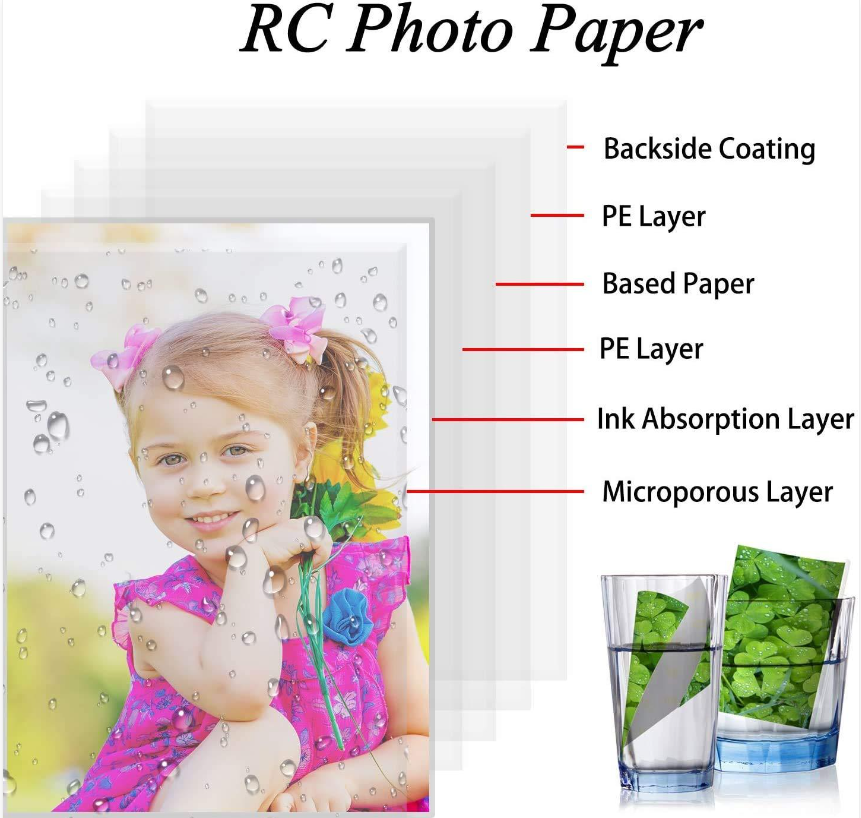
A reliable RC photo paper should deliver consistent performance across repeated print jobs and production batches. Buyers should evaluate both the visible print result and the paper’s physical handling characteristics.
| Test item | What to check | Why it matters |
|---|---|---|
| Surface uniformity | Coating defects, scratches, uneven gloss or texture | Affects image appearance |
| Ink absorption | Drying behavior, smearing and ink spreading | Affects print workflow |
| Color reproduction | Color balance, detail and tonal transitions | Affects customer satisfaction |
| Flatness | Curling, waviness and sheet stability | Affects printer feeding and finishing |
| Weight and thickness | Consistency against agreed specifications | Affects product positioning and handling |
| Water resistance | Performance under the agreed test conditions | Relevant to handling and intended use |
| Batch consistency | Comparison between samples and production batches | Important for repeat orders |
For water resistance, scratch resistance, and image permanence, buyers should define the actual test method and acceptance criteria. These properties should not be assumed to be identical across all RC photo paper products.
A practical sample evaluation can include printing the same test image on multiple samples, checking solid colors and fine details, recording drying time under consistent conditions, testing the paper in the intended printer, comparing samples from different production batches, and checking packaging condition after transport and storage.
7. Should You Buy RC Photo Paper in Sheets or Rolls?
The right format depends on the customer’s printing equipment, production volume, and finishing workflow.
Sheet formats are convenient for desktop inkjet printers, small photo studios, retail photo services, and businesses that need standard sizes.
Roll formats are more suitable for compatible roll-fed printers and production environments that require continuous output or customized print lengths.
Koalapaper lists sheet sizes such as A4, A3, 3R, 4R, and 5R, as well as roll options for different printing requirements. Availability should be confirmed for the selected model.
Wholesale buyers should clarify required sheet or roll dimensions, core diameter and roll width, standard or customized packaging, quantity per pack or carton, private-label requirements, and storage and moisture-protection requirements.
8. How Do You Evaluate an RC Photo Paper Supplier?
Choosing an RC photo paper supplier is not only about comparing unit prices. Product consistency, technical support, customization, and production capability all influence the long-term value of a supply relationship.
Check the supplier’s product range
A supplier with multiple GSM options, finishes, and formats can help buyers build a more flexible product portfolio. Confirm whether the supplier can support both standard products and customized specifications.
Review quality control procedures
Ask how the supplier checks basis weight, thickness, coating uniformity, ink absorption, flatness, and print compatibility. Request test records or sample evaluations where available.
Confirm sample testing before bulk orders
Samples allow buyers to test the paper using their own printers, inks, and production workflows. This is especially important when supplying professional photo labs or customers with specific image-quality requirements.
Discuss packaging and delivery
RC photo paper can be affected by unsuitable storage and handling. Buyers should check whether packaging protects the paper from moisture, dust, and physical damage during transportation.
Evaluate customization and communication
For distributors and private-label buyers, useful supplier capabilities may include customized sheet sizes, roll widths, packaging, branding, and product recommendations based on the target market.
A dependable RC photo paper manufacturer should be able to explain product differences clearly and help buyers identify a suitable specification rather than simply offering the lowest price.
9. Why Source RC Photo Paper from Koalapaper?
Koalapaper supplies RC photo paper in different weights, surface finishes, and formats for professional and commercial inkjet printing applications.
- Weights: 190–300 g/m² across listed models
- Finishes: Glossy, satin, luster, and woven options
- Formats: Standard sheets and roll formats
- Applications: Photo printing, albums, displays, and commercial image output
Koalapaper also describes its production and quality-control processes, including coating, cutting, rewinding, packaging, and print-related testing. Buyers can review the RC photo paper product range and contact the team to discuss their requirements.
If you are sourcing wholesale RC photo paper for distribution or commercial printing, share your target GSM, surface finish, printer type, preferred format, and estimated order quantity. This information helps narrow down suitable options and arrange sample testing before a bulk order.
Looking for an RC photo paper supplier? Contact Koalapaper to discuss product specifications, samples, and wholesale requirements.
Frequently Asked Questions
1. What does RC mean in RC photo paper?
RC stands for Resin Coated. It refers to photo paper with a resin-coated base, typically combined with an ink-receiving coating for inkjet printing.
2. What is the difference between RC photo paper and cast coated photo paper?
They use different base and coating constructions. RC photo paper is commonly positioned for professional photographic output, while cast coated photo paper is often used for more cost-conscious everyday printing. Actual performance depends on the product formulation.
3. Is RC photo paper waterproof?
Many RC photo papers are designed to provide good water resistance, but the degree of resistance varies by product. Buyers should confirm the manufacturer’s test conditions and evaluate samples before making claims about waterproof performance.
4. Can RC photo paper be used with pigment ink?
Some RC photo papers support pigment ink, while others may be designed for dye ink or a specific ink system. Always confirm compatibility for the exact product model and printer.
5. Which is better, glossy or satin RC photo paper?
Neither finish is universally better. Glossy provides a more reflective appearance, while satin offers a softer sheen. The choice depends on the intended image presentation and customer preference.
6. What should wholesalers check before buying RC photo paper?
Wholesalers should compare GSM, surface finish, ink compatibility, printer performance, sheet or roll dimensions, packaging, quality consistency, MOQ, and sample-testing support.