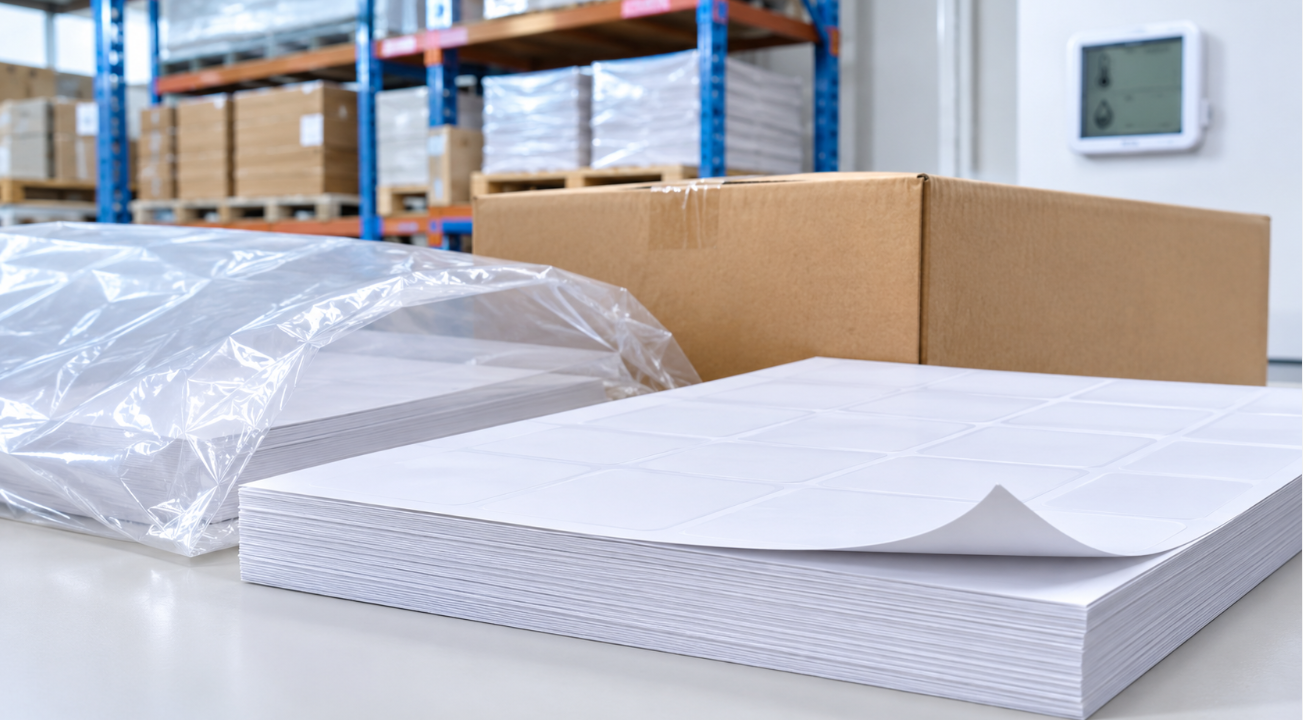
Paper labels can lose their flatness during storage or lift at the edges after application. These problems may be related to humidity changes, temperature fluctuations, adhesive performance, improper handling, or unsuitable application conditions.
As a paper label supplier, we often find that label performance depends on more than the adhesive itself. The paper facestock, adhesive layer, release liner, storage environment, and application surface all work together.
In this article, we explain why inkjet paper labels may curl or lift, how storage conditions affect their performance, and what customers can do to prevent these problems before printing and application.
1. How Are Self-Adhesive Paper Labels Constructed?
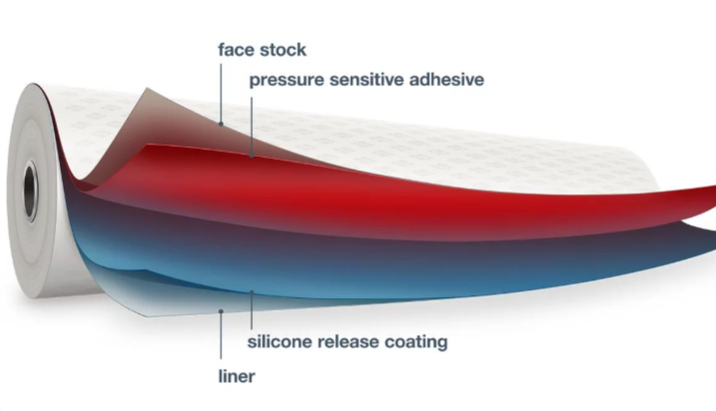
A self-adhesive paper label generally consists of three main layers: a paper facestock, a pressure-sensitive adhesive, and a release liner.
- Paper facestock: The printable surface that receives text, graphics, barcodes, or product information.
- Adhesive: The pressure-sensitive layer that bonds the label to the target surface.
- Release liner: The backing material that protects the adhesive before application and allows the label to be peeled off.
These layers have different material properties. Paper can absorb or release moisture, adhesives respond to temperature, and the liner provides dimensional support.
When environmental conditions change, the three layers may not respond in exactly the same way. This can create internal stress within the label construction, resulting in curling, waviness, or edge lifting.
Understanding the structure is the first step toward identifying the real cause of a label problem.
2. Why Do Paper Labels Curl During Storage?
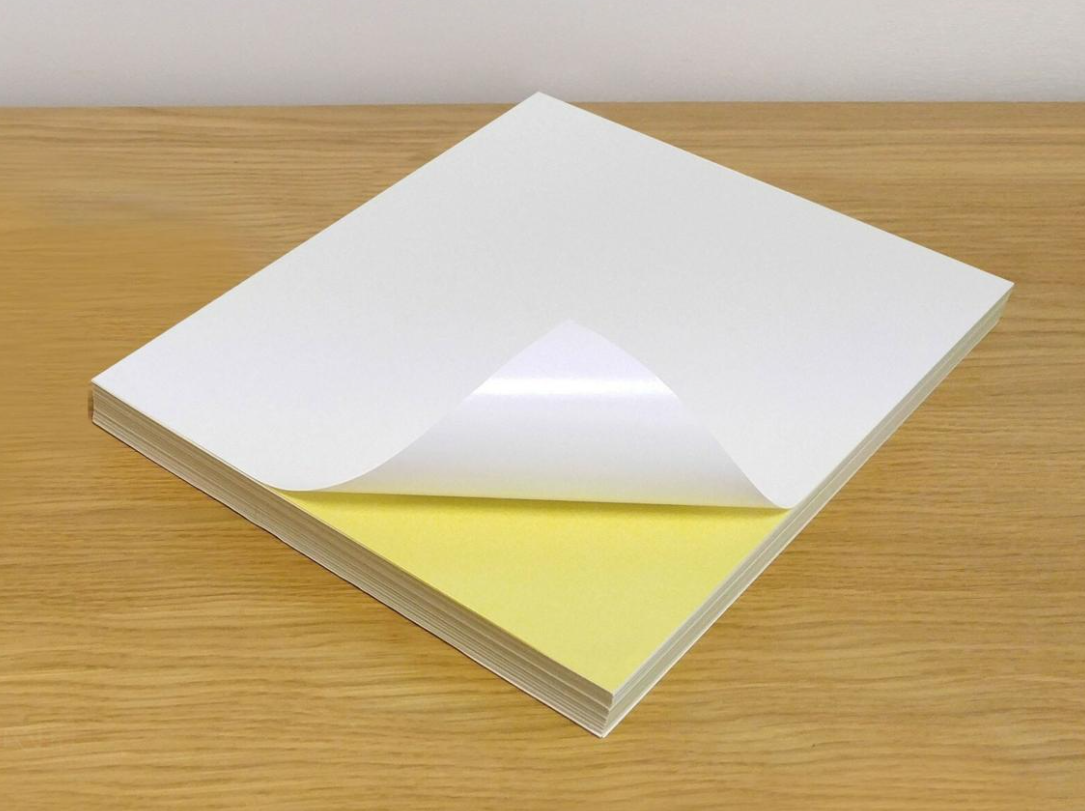
Paper labels can curl even before they are printed or applied. In many cases, the problem starts with changes in the storage environment.
2.1 Humidity Fluctuations
Humidity is one of the most important factors affecting paper label flatness.
Paper is hygroscopic, which means it absorbs moisture from the surrounding air and releases moisture when the air becomes drier.
- In a high-humidity environment, paper may absorb moisture and expand.
- In a low-humidity environment, paper may lose moisture and contract.
- Repeated humidity changes can cause uneven dimensional movement and material distortion.
The facestock and release liner may respond differently to moisture changes. This difference can create tension between the layers and cause the label sheets to curl or become wavy.
For customers storing inkjet printable labels in warehouses, particularly in regions with seasonal humidity changes, maintaining a relatively stable storage environment is important.
2.2 High or Low Storage Temperatures
Temperature also affects self-adhesive label materials.
Excessive heat may soften certain pressure-sensitive adhesives, potentially causing adhesive ooze, blocking, or labels sticking together. Very low temperatures can temporarily reduce adhesive tack and affect its ability to bond properly during application.
Temperature fluctuations can also create differences between the storage environment and the production environment.
For this reason, we recommend keeping paper labels away from heaters, direct sunlight, hot machinery, and other sources of extreme temperature changes.
2.3 Opening the Original Packaging Too Early
Original packaging is not just for transportation. It also helps protect label materials from moisture changes, dust, and physical damage.
Once a pack of paper labels is opened, the exposed material can gradually adjust to the surrounding environment.
If unused sheets are left uncovered overnight or stored without protective packaging for several days, they may absorb or release moisture unevenly.
Our recommendation is simple: open only the quantity you need and reseal the remaining labels in their original protective packaging.
2.4 Improper Stacking and Physical Pressure
Incorrect storage methods can also cause paper labels to lose their flatness.
- Storing sheet labels vertically or leaning them against a wall.
- Placing heavy objects on top of uneven stacks.
- Storing packages directly on damp floors.
- Allowing label sheets to bend during handling.
- Stacking roll materials unevenly or applying excessive pressure.
For sheet labels, flat and even support helps prevent bending and corner deformation.
For roll materials, the correct storage orientation and packaging support should follow the product-specific handling instructions.
2.5 Long Storage Periods and Poor Stock Rotation
Self-adhesive materials have a recommended storage life. Their performance may change over time depending on the adhesive formulation, material construction, and environmental conditions.
Even when labels look normal, prolonged storage under unsuitable conditions may affect adhesive performance and processing stability.
We recommend using a first-in, first-out (FIFO) stock rotation system and checking the recommended shelf life provided in the product’s technical documentation.
3. How Should You Store Inkjet Paper Labels Properly?
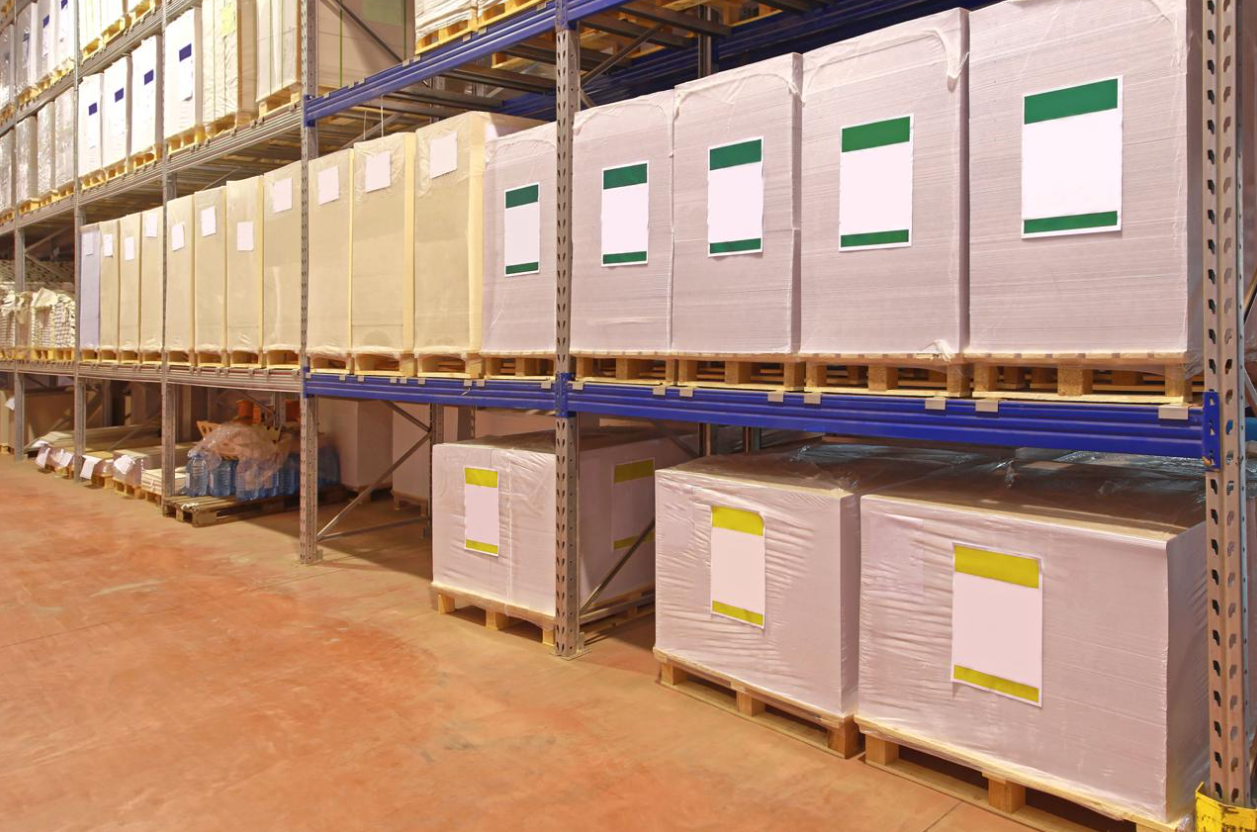
Good storage practices can reduce the risk of curling, adhesive problems, and printing instability.
As a paper label supplier, we recommend the following practices:
| Storage factor | Recommended practice | Purpose |
|---|---|---|
| Temperature | Maintain a stable environment and follow the product TDS. | Reduces temperature-related material changes. |
| Relative humidity | Avoid extreme humidity and frequent fluctuations. | Helps maintain paper flatness. |
| Original packaging | Keep labels sealed until use. | Limits moisture exchange and dust. |
| Opened packages | Reseal unused sheets or rolls. | Reduces exposure to the environment. |
| Storage location | Keep materials away from sunlight, heaters, and moisture sources. | Prevents excessive heat and moisture exposure. |
| Sheet storage | Store sheets flat with even support. | Prevents bending and uneven pressure. |
| Roll storage | Follow the specified roll orientation and stacking instructions. | Helps protect the roll and core. |
| Stock rotation | Follow FIFO and the recommended shelf life. | Reduces the risk of using aged material. |
What Temperature and Humidity Are Suitable?
There is no single storage specification that applies to every self-adhesive paper label. Different facestocks, adhesives, release liners, and packaging constructions may have different requirements.
For reference, several label manufacturers publish storage recommendations around 20–25°C and approximately 40–50% relative humidity. Other product guidelines use broader ranges.
The correct conditions should always be confirmed through the specific product’s technical data sheet rather than treating these reference values as universal requirements.
Why Should Labels Remain in Their Original Packaging?
Protective packaging helps limit direct exposure to environmental changes.
For unopened stock, keep the labels in their original packaging until they are needed. For partially used packs, reseal the remaining materials and return them to suitable storage.
For roll labels, make sure the protective bag and carton are properly closed after use. Avoid placing heavy objects on top of the rolls or storing them in positions that may deform the core.
Should Labels Acclimatize Before Printing?
Yes, when there is a significant difference between the storage environment and the printing or application environment.
For example, labels moved from a cold warehouse into a warm production room may need time to adjust before use.
We recommend allowing the material to acclimatize in its original packaging. The required time depends on the temperature difference, material construction, packaging, and product instructions.
This helps reduce the risk of condensation and sudden environmental changes affecting the material.
4. Why Do Paper Labels Lift at the Edges After Application?

Storage-related curling happens before the label is applied. Edge lifting after application is a different problem and may involve adhesive compatibility, surface conditions, label design, and application methods.
4.1 The Adhesive Is Not Suitable for the Application Surface
Different surfaces have different properties.
Glass, coated cardboard, plastic, and textured packaging may require different adhesive performance.
If the adhesive cannot make sufficient contact with the surface, the label may begin to lift, especially around the edges.
For example, some low-surface-energy plastics can be more difficult to bond to than glass or certain paper surfaces.
The adhesive should be selected according to the actual substrate and application requirements.
4.2 The Application Surface Is Dirty or Contaminated
Dust, oil, moisture, and other contaminants can prevent the adhesive from making proper contact with the surface.
Even when a label appears firmly attached at first, contamination may weaken the bond over time.
Before application, make sure the surface is clean and dry. If cleaning agents are used, ensure that the surface is completely dry before applying the label.
4.3 The Label Is Too Stiff for a Curved Surface
Paper labels have a certain degree of stiffness.
When a flat paper label is applied to a small-diameter bottle, curved container, or irregular surface, the edges may naturally try to lift away.
This is especially relevant when the label is large or the application surface has a tight radius.
In these cases, label size, paper thickness, adhesive selection, and container shape should be considered together.
4.4 Application Temperature and Pressure Are Incorrect
Pressure-sensitive adhesives generally need sufficient contact with the application surface to develop proper adhesion.
If the application temperature is outside the recommended range, the adhesive may not perform as expected.
Insufficient application pressure can also leave air gaps or reduce adhesive contact, increasing the risk of edge lifting.
Always check the adhesive’s recommended application temperature and follow suitable application procedures.
4.5 Printing and Converting Conditions Affect the Label
Printing and converting processes can also influence label performance.
Excessive ink or coating deposition, unsuitable drying conditions, excessive die-cutting pressure, or damage to the label construction may contribute to processing problems.
For inkjet printable paper labels, it is important to balance print quality, ink absorption, drying conditions, and the stability of the complete label material.
5. How Can You Identify the Cause of Paper Label Curling or Edge Lifting?
Before changing the label material, adhesive, or application method, identify when the problem first appears.
| Observed problem | Possible cause | What to check |
|---|---|---|
| Labels curl before printing | Humidity changes or improper storage | Storage environment and packaging |
| Only opened packs show curling | Exposure to surrounding air | Whether unused labels were resealed |
| Sheets become wavy | Moisture absorption or uneven storage pressure | Humidity and stacking conditions |
| Roll edges become distorted | Incorrect roll storage or excessive pressure | Roll position, packaging, and core condition |
| Adhesive appears around the edges | Excessive heat, pressure, or adhesive flow | Storage temperature and product instructions |
| Labels lift after application | Adhesive or surface incompatibility | Substrate, adhesive, and surface cleanliness |
| Labels lift on curved containers | Label stiffness or unsuitable construction | Container diameter, label dimensions, and adhesive |
A useful troubleshooting approach is to compare the material before and after each stage:
- Check the label condition when it arrives.
- Inspect it again after storage.
- Check whether the material changes after opening the package.
- Observe its condition after printing and converting.
- Test adhesion after application.
This helps distinguish a storage problem from a printing, converting, or application problem.
6. How Can We Help You Reduce Paper Label Problems?
At Koalapaper, we understand that consistent label performance depends on the complete material construction, not just the printable surface.
Our inkjet self-adhesive label materials are designed for printing applications where the facestock, adhesive, and release liner need to work together.
When customers experience curling, poor flatness, or edge lifting, we recommend reviewing the material and its actual usage conditions before changing the product.
To help us understand your requirements, please share:
- Whether you use sheet labels or roll labels.
- The type of paper facestock and finish required.
- The target printing method and printer model.
- The surface where the labels will be applied.
- The storage conditions and approximate storage period.
- When the curling or edge lifting first appears.
Based on these details, we can discuss suitable self-adhesive paper label materials and help you evaluate the right specifications for your application.
Explore our inkjet label paper and self-adhesive inkjet paper to learn more about our printable label materials.
Looking for a reliable paper label supplier? Contact Koalapaper to discuss your material requirements and request product samples for evaluation.
Frequently Asked Questions
Why do paper labels curl during storage?
Paper labels may curl because of humidity fluctuations, temperature changes, improper packaging, uneven stacking, or prolonged storage. Paper facestock and release liners may respond differently to moisture changes, creating internal stress.
What is the best humidity for storing self-adhesive paper labels?
Storage requirements vary by material construction. Some manufacturers recommend approximately 40–50% relative humidity, but customers should follow the specific product’s technical data sheet.
Should inkjet paper labels be kept in their original packaging?
Yes. Original packaging helps protect labels from moisture changes, dust, and physical damage. Reseal partially used packs after opening.
Can paper labels recover after curling?
Minor curling may sometimes improve after the material returns to suitable environmental conditions, but recovery is not guaranteed. Labels with permanent deformation should be tested before further printing or application.
Why do paper labels lift at the edges after application?
Common causes include unsuitable adhesive selection, contaminated surfaces, curved application surfaces, incorrect application temperature, insufficient pressure, and label construction issues.
Does a stronger adhesive always prevent edge lifting?
No. Edge lifting is not always caused by insufficient adhesive strength. Surface compatibility, paper stiffness, label dimensions, application conditions, and storage history must also be considered.