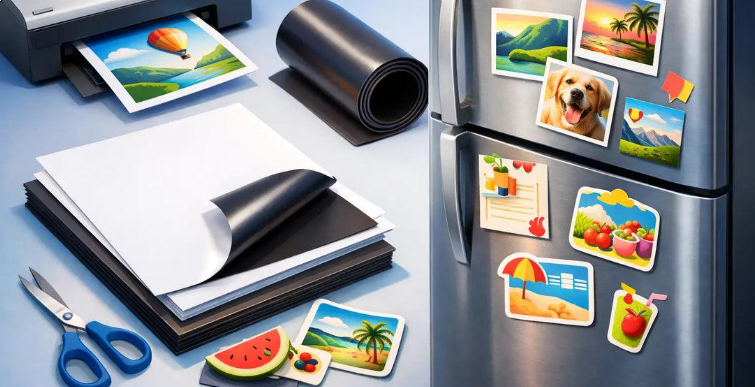
Buyers should evaluate the printable surface, magnetic backing, thickness, sheet flexibility, cutting requirements, and compatibility with their intended printing equipment. These factors influence print quality, finished-product appearance, production efficiency, and the applications a product can serve.
For businesses sourcing printable magnetic sheets in bulk, understanding these material characteristics also makes it easier to compare suppliers and select products that match their customers’ needs.
1. What Are Printable Magnetic Sheets?
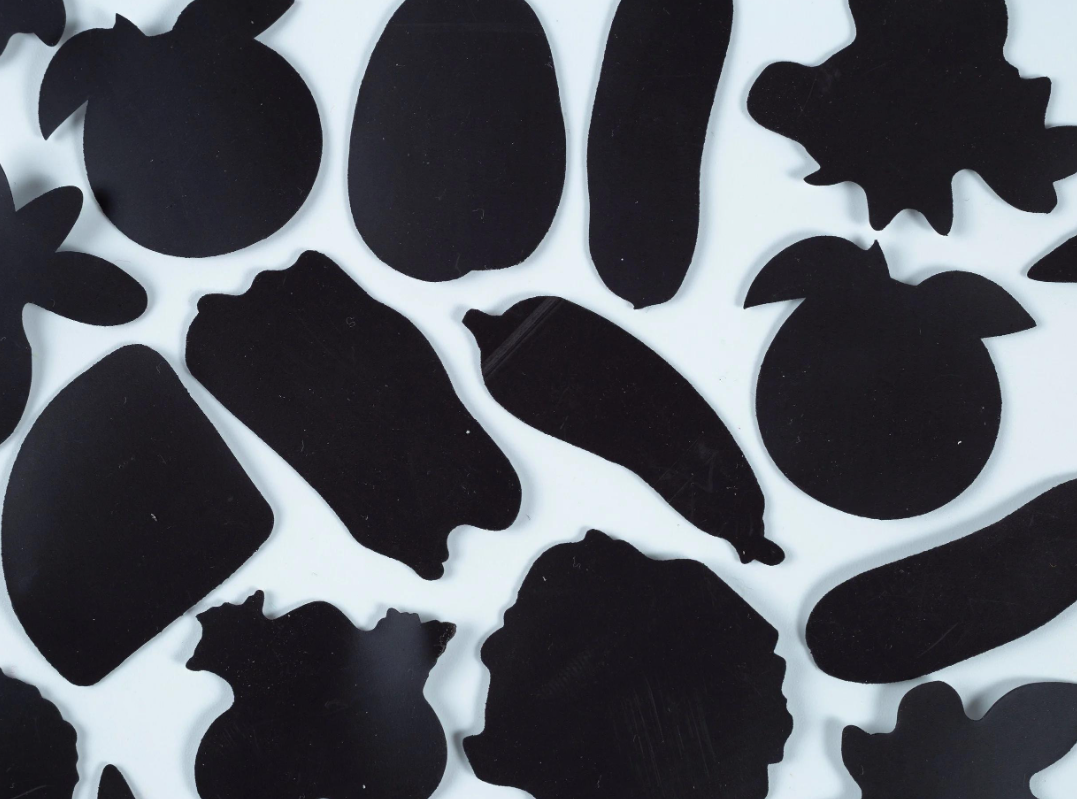
Printable magnetic sheets are flexible magnetic materials designed with a printable surface that allows businesses to create customized magnetic products. Their construction generally combines a printable face layer with a flexible magnetic backing.
Depending on the product design, the printable surface may use a specially treated or coated material to support a particular printing process. The magnetic layer provides the attraction needed for the finished product to attach to suitable ferromagnetic surfaces.
| Component | Main function | What buyers should check |
|---|---|---|
| Printable surface | Receives printed images, graphics, or text | Surface finish and printer compatibility |
| Magnetic backing | Provides magnetic attraction | Magnetic strength and consistency |
| Composite structure | Combines the printable layer and magnetic material | Thickness, flexibility, and flatness |
The exact construction varies by product. Buyers should request a technical data sheet rather than assume that all printable magnet sheets share the same structure.
2. Which Printing Method Should You Check Before Buying Printable Magnetic Sheets?
The printing method should be confirmed before purchasing because printable magnetic sheets are not automatically compatible with every printer. Different products are designed for different printing technologies and equipment configurations.
- Inkjet printing: Suitable materials have a printable surface designed to receive ink from compatible inkjet printers.
- Laser printing: Materials must be specifically designed to withstand the printer’s heat and feeding conditions.
- UV printing: Certain printable magnetic materials may be used with compatible UV printing systems, depending on their surface treatment and construction.
These methods should not be treated as interchangeable. A sheet designed for one printing process may not perform properly in another.
Before placing an order, ask the supplier to confirm:
- The supported printer technology.
- Whether dye-based or pigment-based ink is supported, if applicable.
- Recommended print settings and handling instructions.
- Whether the sheet is suitable for the intended printer’s feeding path.
- Any restrictions on printer size, thickness, or material handling.
For wholesalers, clearly identifying the supported printing method on product listings and packaging can help reduce customer confusion and unsuitable purchases.
3. How Do Thickness and Magnetic Strength Affect Product Selection?
Thickness and magnetic strength are two important specifications when evaluating printable magnetic sheets. Buyers should consider both together rather than assuming that a thicker sheet is always the better option.
Thickness affects handling and finished-product feel
The total thickness of a magnetic sheet may include the printable layer, adhesive or bonding layer if present, and magnetic backing.
- Thinner sheets: May offer greater flexibility and easier handling for certain lightweight applications.
- Medium-thickness sheets: May provide a balance between flexibility and a more substantial finished feel.
- Thicker sheets: May be considered when buyers require a more rigid finished product or a different magnetic-material specification.
These are general selection considerations, not universal performance rules. The actual result depends on the material construction and intended application.
Magnetic strength affects where the product can be used
Magnetic attraction is important when the finished product needs to remain attached to a metal surface. However, magnetic performance is influenced by more than thickness. The magnetic compound, backing structure, surface contact, and target material can all affect the result.
Buyers should ask suppliers for available magnetic specifications and test samples on the surfaces their customers will actually use.
4. Which Surface Finish Is Suitable for Different Printable Magnet Applications?
The printable surface influences the appearance of the finished product and should be selected according to the design and printing requirements.
| Surface finish | Visual characteristics | Possible application considerations |
|---|---|---|
| Glossy | Reflective surface with a polished appearance | Colorful promotional designs and photo-style products |
| Matte | Reduced surface reflection | Designs where glare reduction is preferred |
| Smooth printable surface | Even surface appearance | Detailed graphics and text, subject to print compatibility |
A glossy finish may help printed colors appear visually vibrant, while a matte finish can create a softer appearance. Neither finish is automatically better for every application.
For buyers sourcing printable magnetic sheets for photo magnets, promotional products, or retail displays, sample testing is the best way to compare surface appearance and print results.
5. What Products Can Businesses Make with Printable Magnetic Sheets?
Printable magnetic sheets can support a range of customized products. For wholesalers, this creates opportunities to supply different customer groups using related material categories.
Photo magnets

Photo magnets turn printed images into decorative products for refrigerators, offices, and other suitable metal surfaces. They may be used by photo printing businesses, personalized gift suppliers, and promotional product companies.
Promotional and advertising magnets
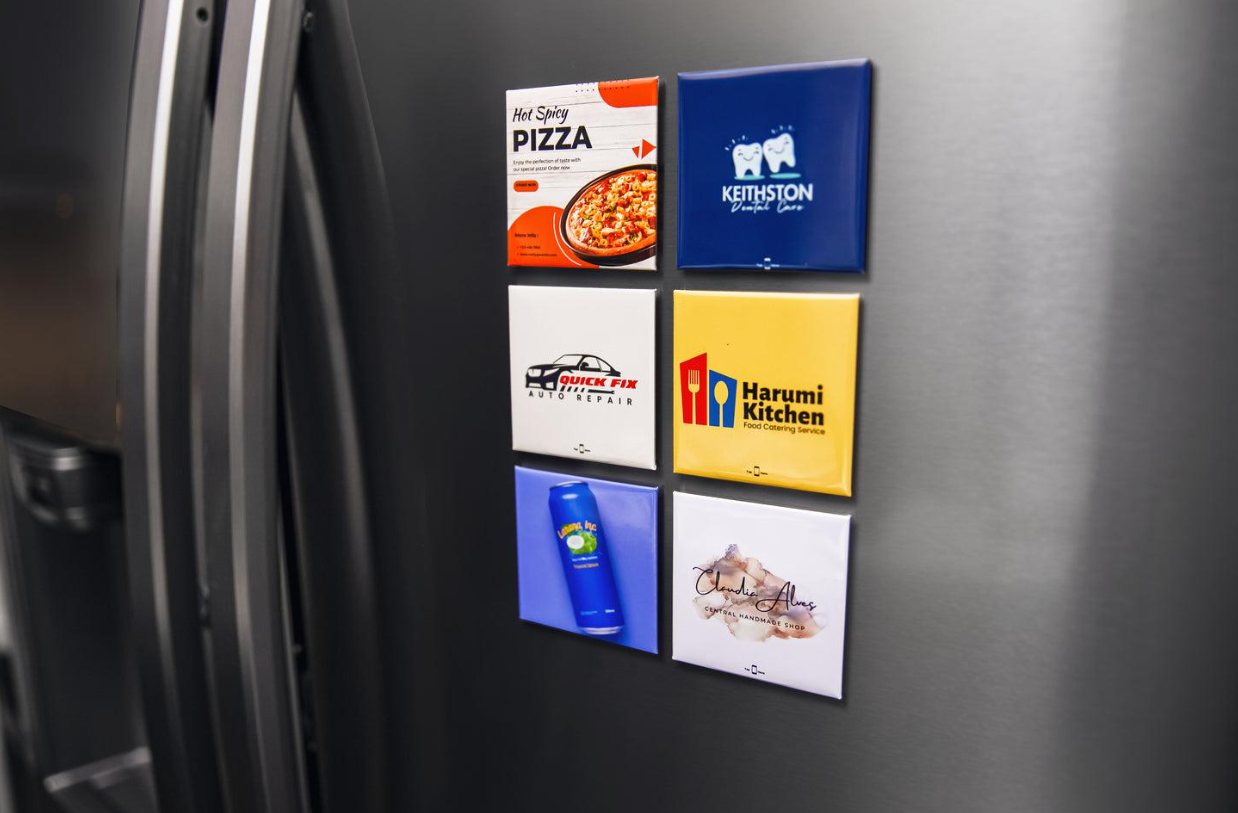
Businesses can print logos, contact details, promotional messages, or product graphics onto magnetic materials. These products can serve as advertising giveaways, branded merchandise, and local business promotional items.
Decorative magnets
Custom-cut shapes, illustrations, patterns, and themed designs can be used to create decorative magnetic products for retail and gift markets.
Educational magnetic materials
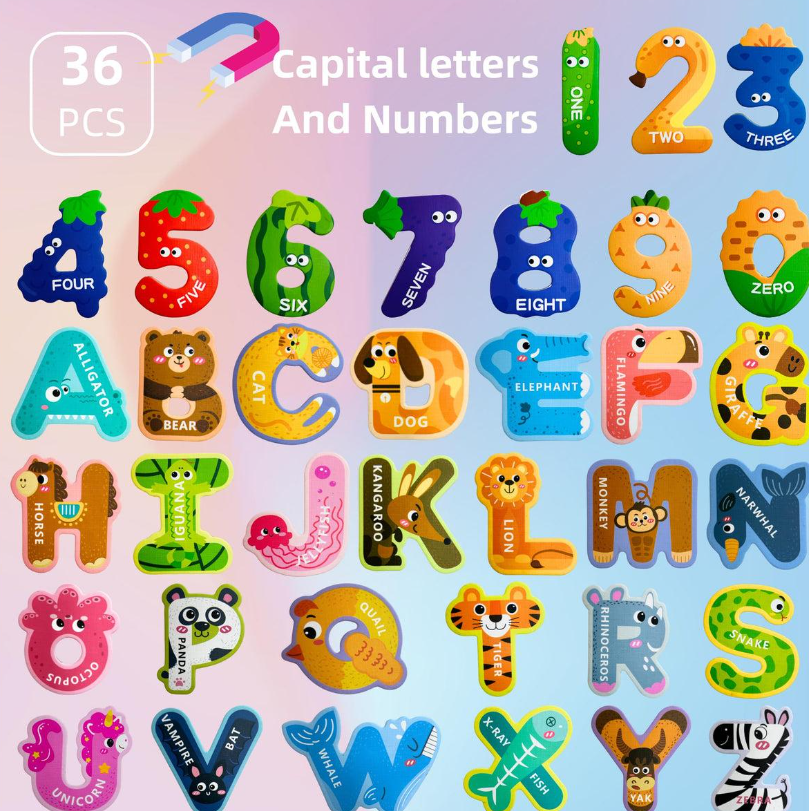
Depending on the material specifications and intended use, printed magnetic sheets can also be converted into letters, numbers, symbols, and learning aids. For this category, buyers should pay particular attention to the intended end use, cutting quality, and relevant product safety requirements.
6. How Should Buyers Evaluate Cutting and Converting Performance?
Printable magnetic sheets are often printed first and then cut into individual products. Therefore, cutting and converting performance should be included in the purchasing evaluation.
Depending on the material and production setup, finished products may be made through manual cutting, die cutting, or compatible digital cutting equipment.
Before ordering in bulk, buyers should check:
- Whether the material can be cut cleanly using their intended equipment.
- Whether the magnetic layer remains intact during cutting.
- Whether edges show tearing, roughness, or unwanted deformation.
- Whether the sheet stays sufficiently flat during handling.
- Whether the material thickness is compatible with the cutting equipment.
The cutting result depends on both the material and the equipment settings. Buyers should not assume that a sheet suitable for printing will automatically be suitable for every cutting process.
For commercial printing businesses, testing the complete workflow—from printing to cutting and final application—is more useful than testing the printable surface alone.
7. What Should Wholesalers Check When Buying Printable Magnetic Sheets in Bulk?
Wholesale buyers should evaluate product specifications, consistency, packaging, and supply capability before choosing a magnetic sheet supplier.
| Purchasing factor | Questions to ask |
|---|---|
| Printing compatibility | Which printer technologies are supported? |
| Material thickness | What thickness options are available? |
| Magnetic performance | What magnetic specifications can the supplier provide? |
| Surface finish | Are glossy, matte, or other finishes available? |
| Sheet dimensions | What standard and custom sizes can be supplied? |
| Cutting suitability | Which cutting methods have been tested? |
| Sample availability | Can samples be provided before bulk ordering? |
| Quality control | How are thickness, surface quality, and product consistency checked? |
| Packaging | How are sheets protected against bending, dust, and surface damage? |
| Supply conditions | What are the MOQ, lead time, and repeat-order arrangements? |
A supplier should be able to provide product-specific information instead of relying on broad statements about all magnetic sheets.
For importers and distributors, consistent specifications between sample approval and bulk production are especially important. Buyers can request an approved reference sample and written specifications to support future order comparisons.
8. How Can You Choose the Right Printable Magnetic Sheet Supplier?
A suitable printable magnetic sheet supplier should offer clear technical information, stable product specifications, and support for the buyer’s intended applications.
- Product knowledge: The supplier should understand the differences between printable surfaces, magnetic backing materials, thickness options, and printing compatibility.
- Manufacturing and quality control: Ask how the supplier controls material consistency, sheet dimensions, surface condition, and magnetic properties. Request relevant quality documents or test information when necessary.
- Customization: For wholesalers and private-label buyers, available sheet sizes, packaging options, and product specifications may influence the suitability of a supplier.
- Sample testing and communication: A supplier that can provide samples and respond clearly to technical questions can help buyers assess the material before committing to larger orders.
- Long-term supply capability: Wholesale customers need a supplier that can support repeat orders and communicate changes to product specifications or availability.
9. How Can Koalapaper Support Your Printable Magnetic Sheet Sourcing?
When sourcing printable magnetic sheets, buyers should start by identifying their target printing method, required sheet dimensions, desired surface finish, and finished-product applications.
These details help narrow down the material options and make supplier discussions more efficient. For wholesalers, distributors, and printing businesses, it is also useful to request samples and confirm the product specifications before placing a bulk order.
Koalapaper provides printing media and specialty material solutions for different business requirements. If you are evaluating printable magnetic sheets for your product portfolio, contact the Koalapaper team to discuss material availability, technical specifications, samples, and wholesale requirements.
Looking for a Printable Magnetic Sheet Supplier?
Discuss your printing material sourcing requirements and explore potential product solutions with Koalapaper.