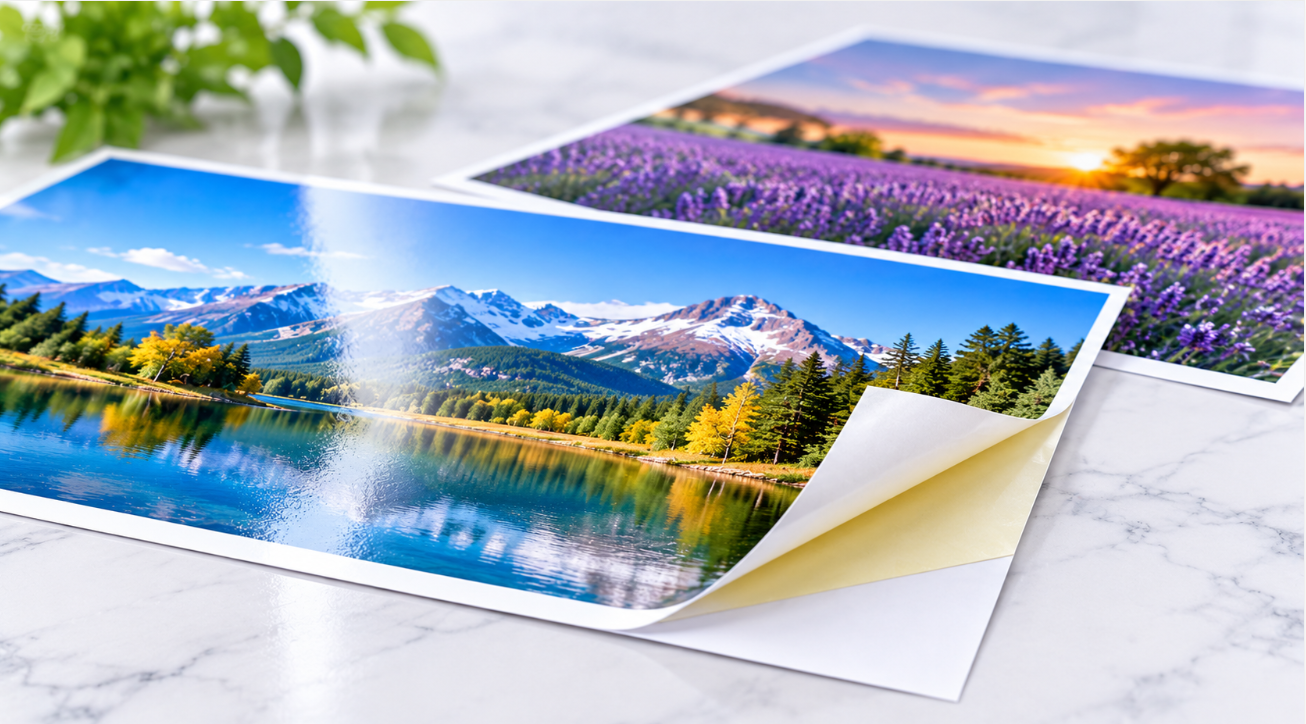
Self-adhesive photo paper combines an inkjet-printable image surface with an adhesive backing protected by a release liner. It lets users print an image and apply it directly to a compatible surface without adding separate mounting adhesive. For wholesale buyers, the key is to evaluate the printable coating, adhesive, liner and intended application as one material system—not just compare the paper’s finish or weight.
What makes self-adhesive photo paper different from ordinary photo paper?
Self-adhesive photo paper has a printable face and a peel-off adhesive backing, while ordinary photo paper is designed to be mounted or displayed using a separate method. The adhesive backing makes it useful for photo stickers, decorative prints, labels and other applications where a printed image needs to be applied directly to a surface.
The term self-adhesive photo paper describes the construction, not one universal performance level. Products may differ in printable finish, paper base, adhesive chemistry, tack, removability and liner design. A glossy sheet and a matte sheet may both be self-adhesive, but they can behave differently in printing and in the final application.
Koalapaper lists adhesive inkjet paper for uses including portrait printing, DIY sticker printing, customized labels and indoor posters. These are application examples, not a guarantee that every adhesive-paper grade is suitable for every surface or environment.
How is self-adhesive photo paper constructed?
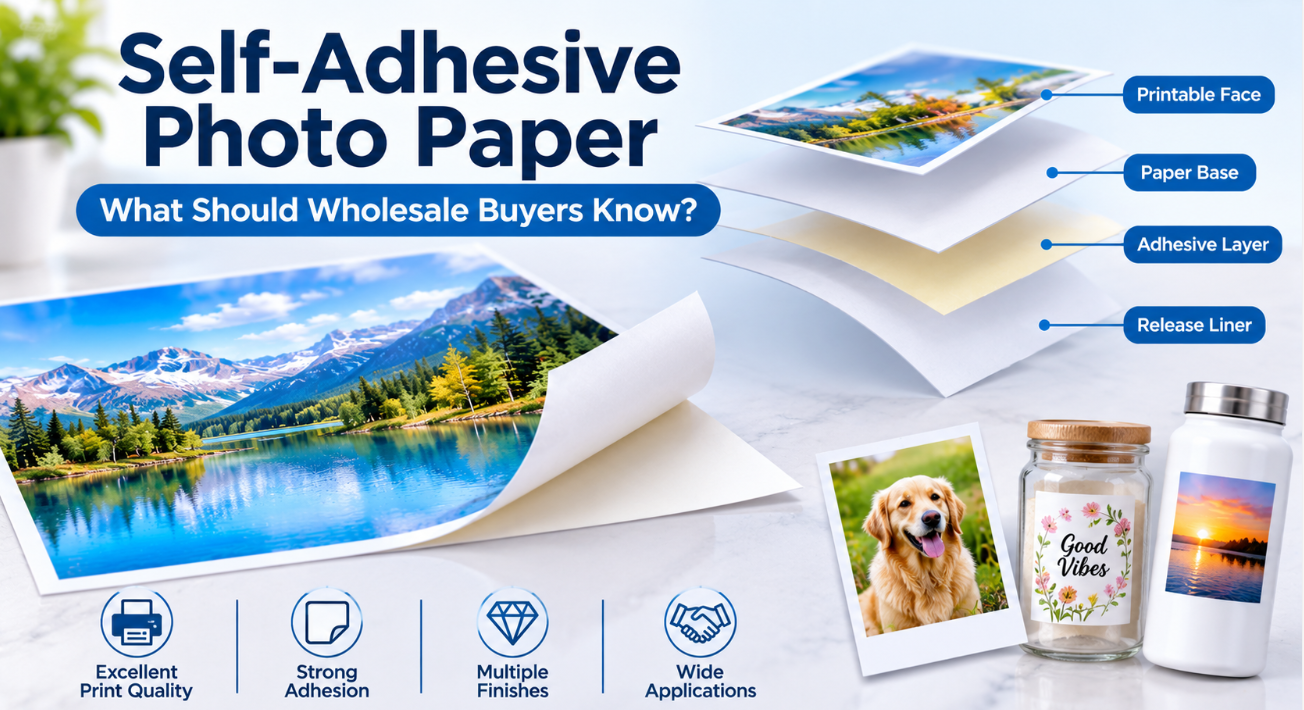
A typical self-adhesive photo paper combines a printable face, an adhesive layer and a release liner; the exact coating and base-paper structure depends on the product. The face receives the image, the adhesive bonds the print to the target surface, and the liner protects the adhesive until application.
| Component | Main role | What buyers should check |
|---|---|---|
| Printable face | Receives ink and determines the visible finish | Glossy or matte finish, print compatibility, image quality and drying behavior |
| Paper base | Supports the printable coating | Weight, thickness, stiffness and flatness |
| Adhesive layer | Bonds the printed sheet to the target | Adhesive type, initial tack, intended surface and removability |
| Release liner | Protects the adhesive before use | Easy peeling, liner stiffness and handling during printing or converting |
Some products use additional ink-receptive or protective coating layers. Koalapaper’s product page describes a multi-layer construction and identifies hot-melt and water-based adhesive options in its range. Buyers should confirm the construction and adhesive option for the exact SKU rather than assume all versions share the same specification.
Which adhesive type should buyers compare?
Choose adhesive based on the target surface, application conditions and whether the print needs to stay in place or be removed. Adhesive type alone does not determine performance; the face material, surface energy, cleanliness, application pressure and environment also matter.
Koalapaper’s published guidance distinguishes water-based and hot-melt options and describes different positioning and bonding characteristics. Treat those descriptions as a starting point, then verify the exact product’s performance with a sample on the customer’s real substrate.
- Is the adhesive intended for permanent or removable use?
- What surfaces has the supplier tested it on—paper, glass, metal, wood or plastic?
- Does the application involve a flat or curved surface?
- Will the finished print be used indoors or exposed to moisture, heat or sunlight?
- Is there a required application temperature or pressure?
Avoid promising universal adhesion. A product that works well on clean glass may not behave the same way on textured, dusty or low-surface-energy plastic.
What print and finish factors matter?
The printable surface must match the printer, ink system and expected image appearance. Adhesive backing does not automatically make a paper compatible with every inkjet printer, and a glossy finish does not by itself establish water resistance.
- Finish: Glossy surfaces emphasize shine; matte surfaces reduce reflections. Choose based on the intended display and customer preference.
- Ink compatibility: Confirm whether the product is designed for the customer’s dye- or pigment-based inkjet workflow.
- Drying behavior: Check whether the printed sheet can be handled or cut at the customer’s production pace.
- Image quality: Evaluate color, detail, banding and coating uniformity using the customer’s printer settings.
- Water and abrasion resistance: Verify these claims for the specific face coating and ink combination. Do not assume the adhesive layer makes the printed face waterproof.
For a practical trial, print the same image on the candidate material and the buyer’s current stock, then compare drying, handling, cutting and application results under the same conditions.
Where is self-adhesive photo paper commonly used?
Self-adhesive photo paper is suitable for applications that need a printed image and a ready-to-apply backing, provided the material matches the surface and service conditions. Common examples include photo stickers, decorative image prints, personalized items, indoor displays and selected label uses.
It can be useful for businesses that sell personalized photo products or produce short-run graphics without a separate mounting step. However, it should not be treated as a substitute for every labelstock or outdoor graphic material. Applications involving long-term outdoor exposure, heavy abrasion, curved containers or regulated product labeling may require a purpose-designed material and additional testing.
What should wholesalers and distributors test before ordering?
A small, application-based trial is more useful than selecting by GSM or finish alone. It checks whether the complete construction works in the buyer’s printer, converting process and end-use environment.
- Print: Confirm printer and ink compatibility; inspect image quality and drying.
- Handle: Check feeding, curl, cutting and liner separation.
- Apply: Test on the actual target surface, using the intended application pressure.
- Observe: Check for edge lift, bubbles, adhesive transfer or surface damage after the expected dwell time.
- Store: Keep unused sheets in their original packaging and assess whether storage conditions affect flatness or handling.
- Confirm supply details: Record the tested SKU, finish, adhesive type, liner, sheet size, packaging and agreed specification.
A sample approval should identify the exact material tested. A different adhesive, liner or face coating may change the result even when the product name looks similar.
What should buyers ask a self-adhesive photo paper supplier?
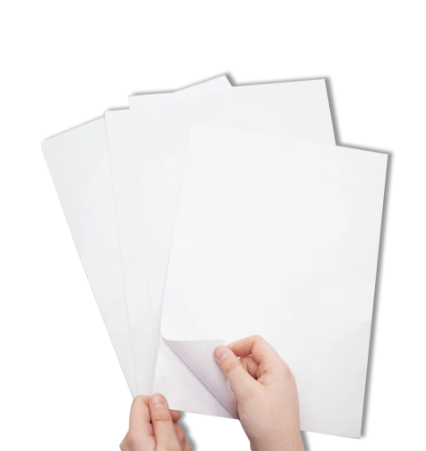
A reliable supplier should be able to identify the product construction and provide samples or specifications that match the intended application. Buyers should request information that can be checked against the sample and the eventual bulk order.
- Product code and available finishes
- Face-paper weight and thickness, where specified
- Adhesive type and permanent/removable positioning
- Release-liner type and peel behavior
- Printer and ink compatibility guidance
- Recommended applications and known limitations
- Available sheet sizes, packaging and customization options
- Sample availability, order quantity and quality-control process
For Koalapaper’s adhesive inkjet paper range, review the product information and confirm the exact construction, adhesive option and intended use with the team before ordering. Explore Koalapaper adhesive inkjet paper.
Explore related Koalapaper materials
- Adhesive inkjet paper — Printable self-adhesive paper for photo, sticker and selected label applications.
- Inkjet label paper — A related option to evaluate when the requirement is a printable paper label construction.
- Inkjet vinyl label — Consider a film-faced alternative when the application requires a different face material; confirm printer and use compatibility.
FAQs
Is self-adhesive photo paper the same as sticker paper?
The terms can overlap. Self-adhesive photo paper usually emphasizes a photo-printable face, while sticker paper is a broader term that can include different paper and film materials, finishes and adhesive constructions.
Can self-adhesive photo paper be used in any inkjet printer?
Not automatically. Check the product’s printer and ink compatibility, then test it in the intended printer. Printer feeding, coating and drying behavior can vary by material.
Is self-adhesive photo paper waterproof?
Do not assume so. Water resistance depends on the printable coating, ink, adhesive construction and exposure conditions. Confirm the specific product’s claim and test the finished print.
Can it stick to plastic?
Some constructions may adhere to selected plastics, but performance depends on the plastic surface and adhesive. Test on the actual plastic, especially if it is textured, curved or has low surface energy.
What is the most important factor when buying wholesale?
The most important factor is whether the exact material works reliably in the buyer’s real workflow. Confirm the construction, test print and application performance, and then document the approved SKU and specification for repeat orders.