If you work in the custom apparel industry, you've probably asked yourself this question at least once: "Which heat transfer method should I choose for this order?"
I've seen many custom apparel businesses waste thousands of dollars by choosing the wrong transfer method. For example, a printing shop invested in a DTF printer but only used it for mass-producing simple monochrome logo orders; an Etsy seller bought heat transfer vinyl in bulk but used it for full-color photo designs; and a startup tried to handle a 500-piece batch order with Inkjet Heat Transfer Paper.
These mistakes result in lost time, money, and customer trust.
In this guide, I'll detail three commonly used heat transfer methods—heat transfer paper, heat transfer film (HTV), and direct transfer (DTF). I'll explain the principles behind each method, compare their advantages and disadvantages across eight key dimensions, and recommend the appropriate method for your specific project.
At Koala® Paper, we've been manufacturing heat transfer paper and sublimation paper for over 20 years. We work with apparel businesses of all sizes, from family-run Etsy sellers to large manufacturers. This guide compiles our experience in helping clients select the right materials.
What is Inkjet Transfer Paper?
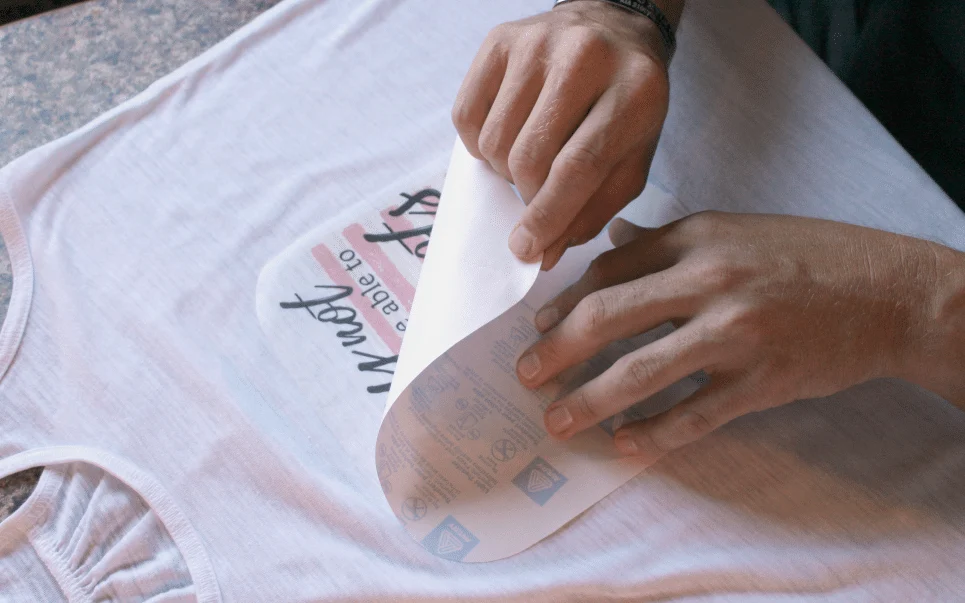
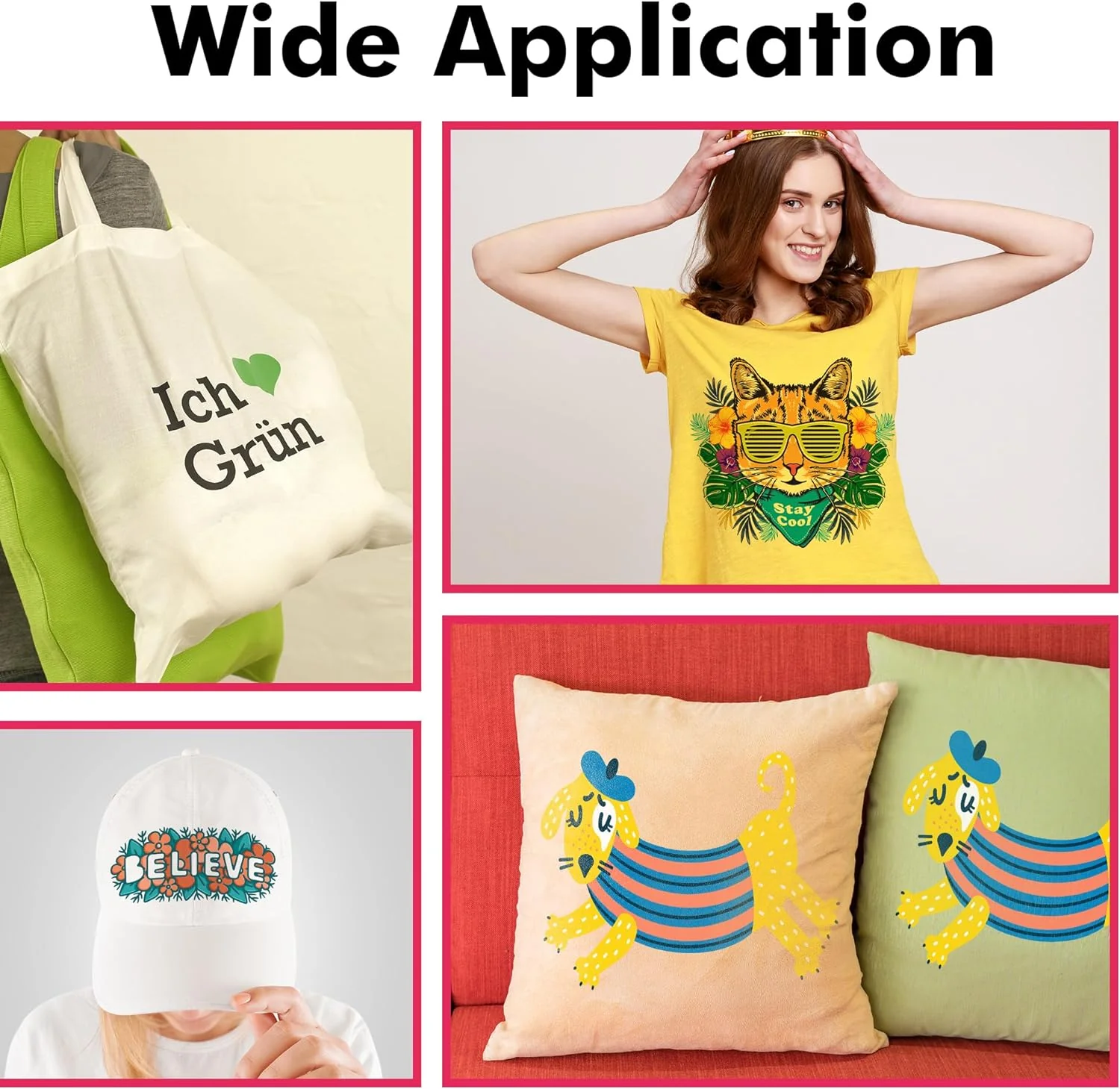
Iron on Transfer Paper is a specially coated paper designed for use with standard inkjet printers. You can print your design onto iron on transfer paper for t-shirts using a regular inkjet printer, then heat and press it to transfer the image onto the fabric.
How to Use:
- Print your design onto the iron on transfer paper using an inkjet printer.
- Cut out the design (leaving a small border).
- Place the transfer paper face down on your garment.
- Heat and press using a heat press or a household iron.
- Tear off the backing paper—the design is now on the fabric.
Iron on Transfer Paper uses an adhesive film to bond the image to the fabric surface. Unlike sublimation, which infuses ink into fibers, transfer paper forms a thin film on the fabric surface.
Key Advantages: Suitable for 100% cotton, cotton blends, and even some synthetic fabrics—something sublimation paper cannot do.
Best for: Small-batch production, custom single pieces, intricate full-color designs, and beginners.
What is Heat Transfer Vinyl?
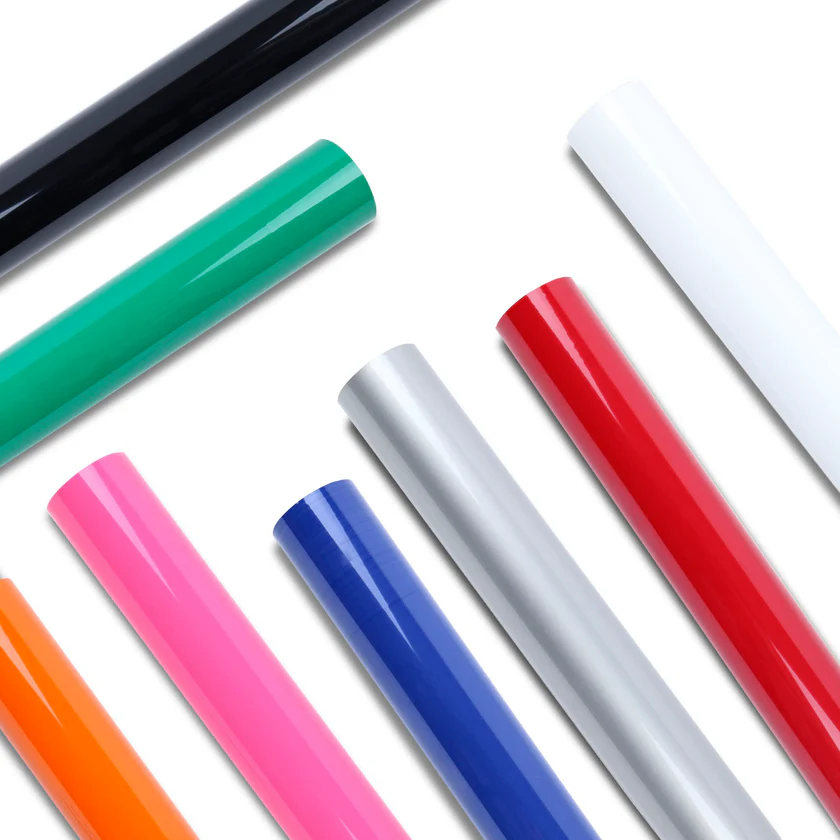
Heat Transfer Vinyl (HTV) is a polyurethane-based material available in sheets or rolls, either solid-color or patterned. You can use a cutter (such as Cricut or Silhouette) to cut out a design from the vinyl sheet, remove excess material, and then use a heat press to imprint the design onto clothing.
How it works:
- Design your design in the cutting software.
- Cut the design from the HTV sheet using a cutter.
- Remove excess vinyl (remove material around the design).
- Place the design onto the clothing.
- Apply heat and pressure using a heat press.
Key advantages: HTV Vinyl is highly durable, offers a rich variety of colors and finishes (metallic, glitter, holographic, glow-in-the-dark), and can create clear, solid-color designs.
Best for: Simple shapes, text, numbers, logos, and designs requiring special surface treatments.
What is Direct to Film (DTF Printing)?
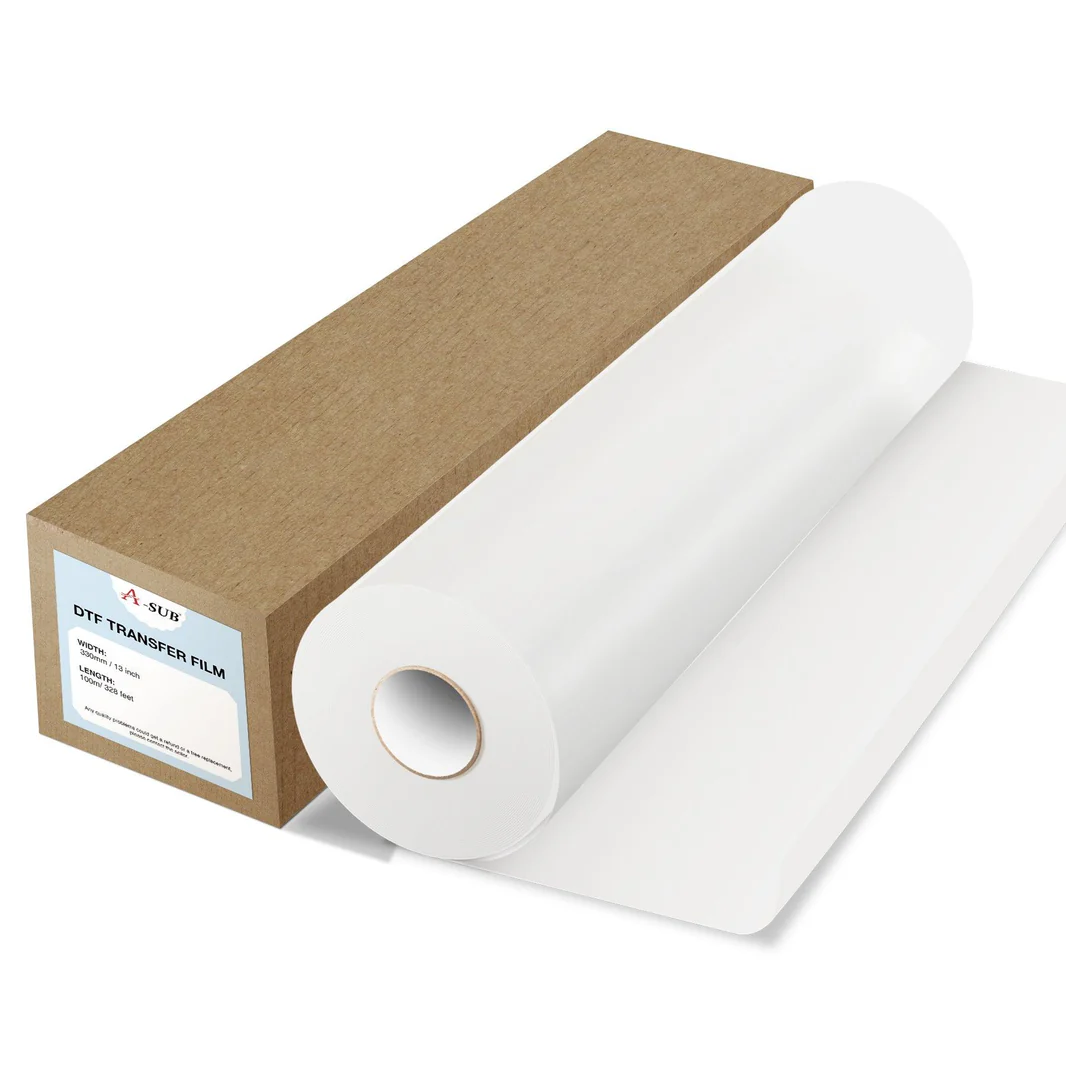
Direct to Film (DTF) printing is a new type of digital transfer printing method. It prints your design directly onto a specially coated PET substrate, then applies hot melt adhesive powder, heats up to melt the DTF powder, and finally uses a heat press to transfer the design onto the target garment.
How it works:
- Use a DTF printer to print your design onto a special PET film.
- Apply hot melt adhesive powder to moist ink.
- Cure the film, allowing the adhesive powder and ink to bond firmly.
- Use a heat press to press the film onto the garment.
- Remove the film—the design is left on the fabric.
Key advantages: DTF Transfer Printing works on virtually any fabric—cotton, polyester, blends, nylon, leather—and delivers full-color, photorealistic designs with exceptional detail.
Best for: Full-color designs, small-batch production, fine patterns, and fabrics sensitive to heat.
Side-by-Side Comparison: Heat Transfer Paper vs HTV vs DTF
| Feature | Heat Transfer Paper | HTV | DTF |
| Equipment needed | Inkjet printer + heat press | Vinyl cutter + heat press | DTF printer + powder shaker + heat press |
| Setup cost | Low | Low-Medium | High |
| Design complexity | Full-color, photos, gradients | Solid colors, simple shapes | Full-color, photos, gradients |
| Fabric compatibility | Cotton, blends, polyester | Cotton, poly, blends | Very broad — cotton, poly, blends, nylon, leather |
| Durability (washes) | 20–40 washes | 50–100+ washes | 40–100+ washes |
| Feel/Hand | Noticeable adhesive layer | Vinyl layer feel, thicker | Softer, more integrated |
| Ease of use | Easy — print and press | Moderate — cutting + weeding | Complex — multiple steps |
| Running costs | Low | Medium | High (film + powder + ink) |
| Best for | Small runs, one-offs, detailed designs | Simple logos, text, specialty finishes | Full-color, versatile, o |
In-depth Analysis: Heat Transfer Paper for Inkjet Printer
Advantages
Versatility
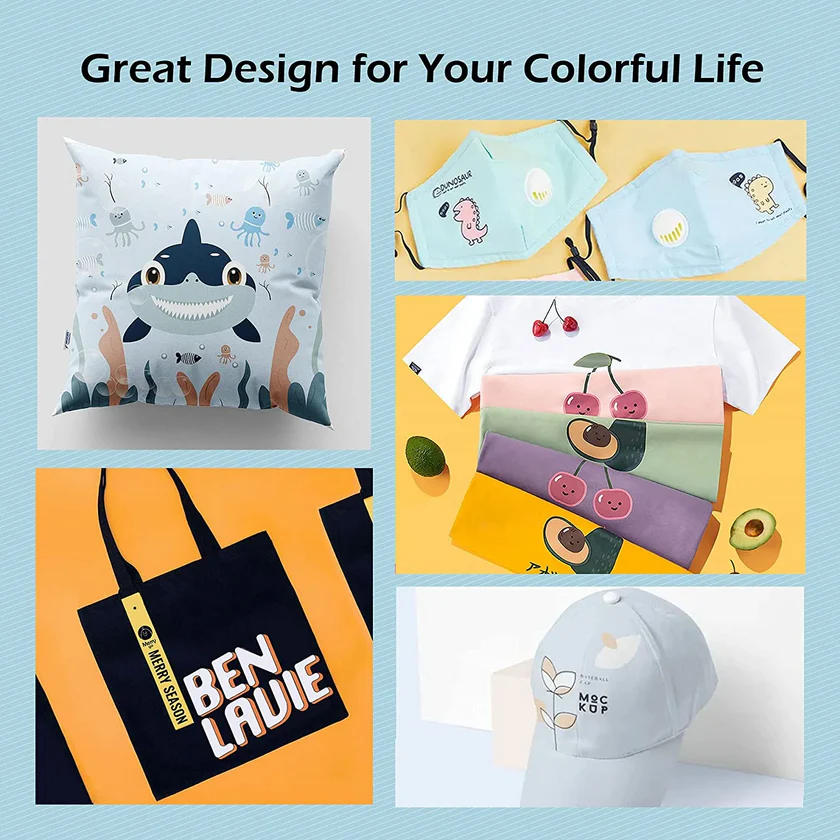
Heat Transfer Paper for shirts is versatile and can be used on a variety of materials, including cotton, polyester, and blended fabrics. Therefore, it's not just suitable for T-shirts but also for many other fabrics.
High-Quality Output
Heat Transfer Paper delivers vibrant, high-resolution prints, especially suitable for designs with rich details and vibrant colors. Its image quality is often comparable to other advanced printing methods.
Affordable for Small Batch Printing
For small batch printing, Inkjet Transfer Paper offers excellent value. Unlike screen printing, which requires significant upfront investment, heat transfer requires minimal preparation. Therefore, it's ideal for small businesses, hobbyists, and one-off custom printing.
Easy to Use
Using Heat Transfer Paper is very simple. With just an inkjet printer and a heat press, anyone can easily produce professional-quality prints.
Limitations
Durability
While heat transfer paper prints initially look great, their durability may not be as good as other methods. Over time, repeated washing and wearing can cause prints to fade, crack, or peel. With proper care, it can typically withstand 30-50 washes.
Fabric Compatibility
While heat transfer paper is versatile, it works best on light-colored pure cotton fabrics or fabrics with a cotton content exceeding 60%.
Larger Order Processing Time
For large orders, using heat transfer paper can be very time-consuming. Each product requires individual printing, positioning, and ironing.
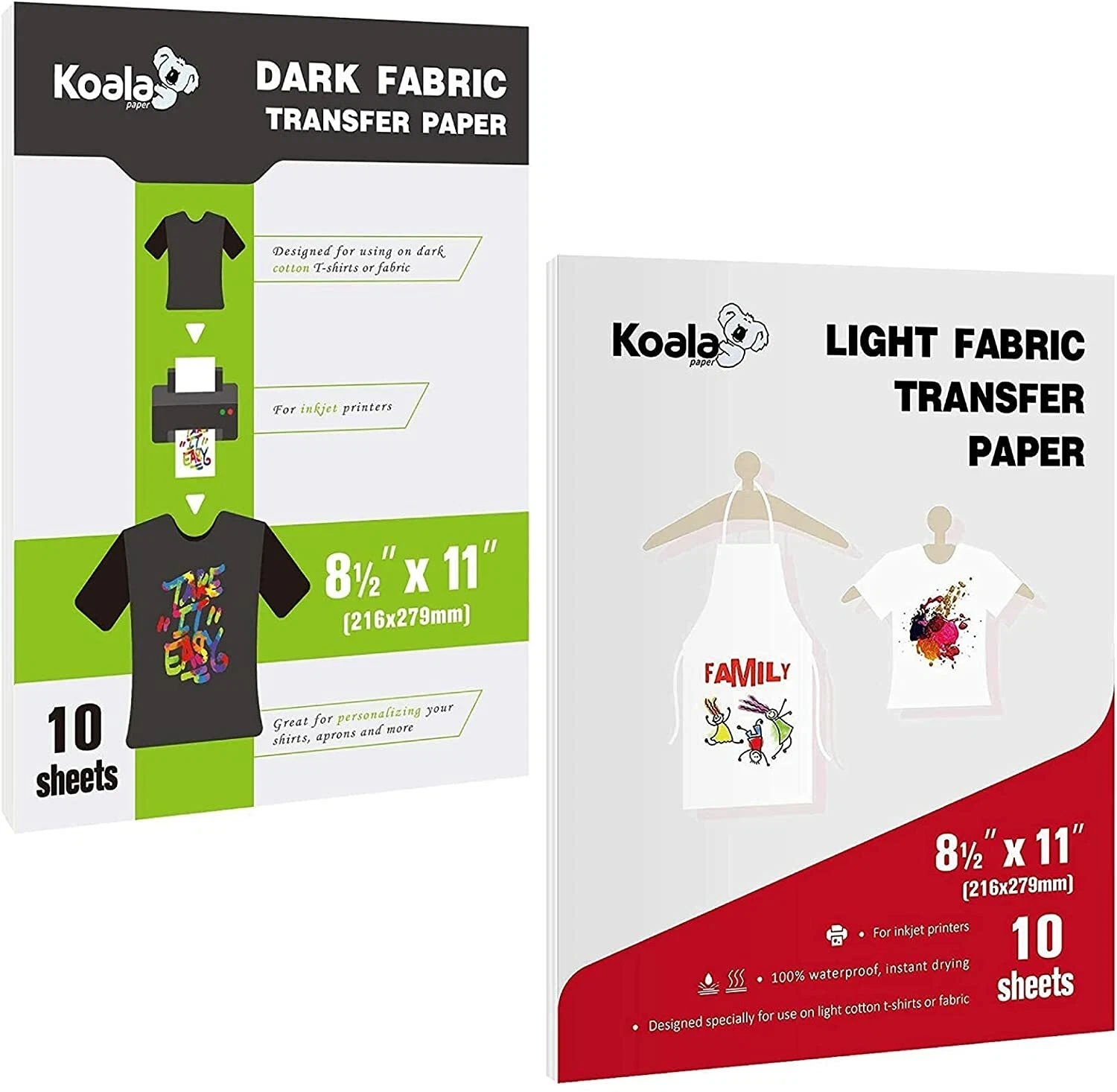
Our Products: Our factory produces high-quality inkjet transfer paper suitable for both light and dark fabrics, compatible with standard inkjet printers and common water-based inks.
In-depth Analysis: Heat Transfer Vinyl (HTV)
Advantages
Superior Durability
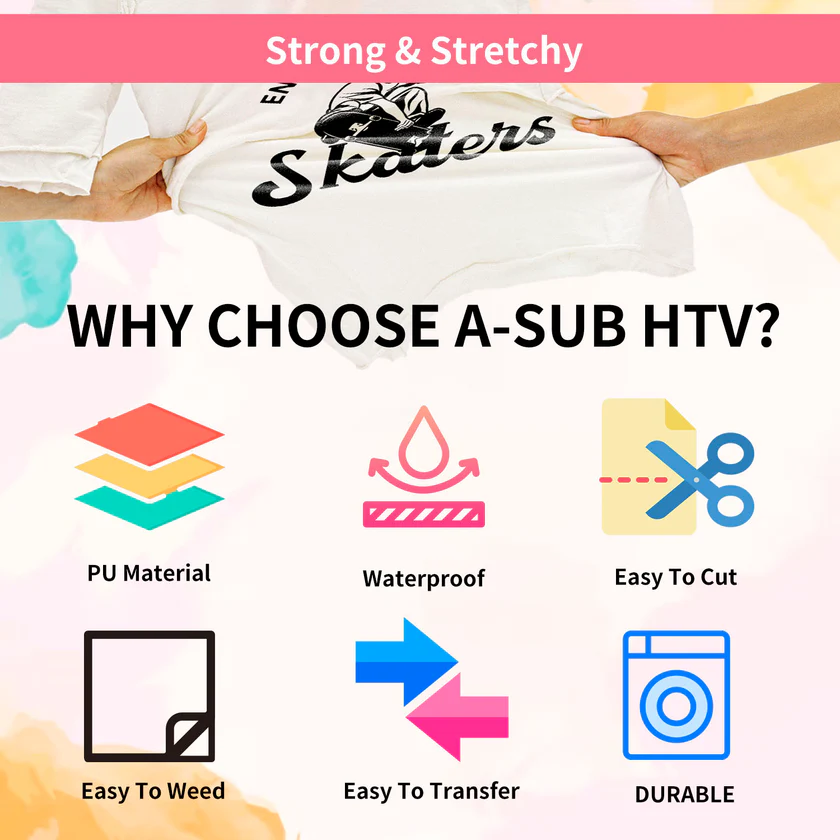
HTV printing is extremely durable and can withstand multiple washes—typically 50-100 or more. Properly used HTV maintains its durability for a long time.
Special Effects
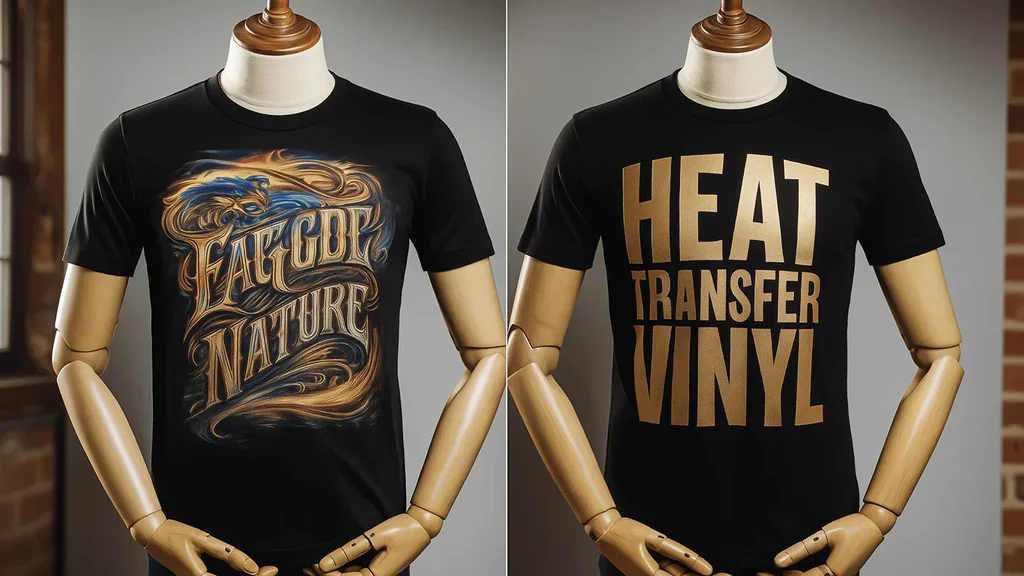
HTV Vinyl for T-shirts offers special effects that cannot be replicated by other methods—metallic sheen, shimmer, holographic effects, and striking special effects. HTV still holds a unique position in the field of garment embellishment, especially when a metallic glitter effect is needed.
Clear, Eye-Catching Designs
HTV Vinyl is ideal for simple shapes, letters, and numbers. It creates a clear, eye-catching visual effect.
Lower Operating Costs
For simple designs, the operating costs of HTV are predictable and controllable.
Limitations
Design Limitations
HTV is best suited for solid color vector designs. While printable HTV adds some color flexibility, it also has limitations. Creating multi-color designs requires multiple cuts and transfers, which is complex and time-consuming.
Manual Operation
Using heat transfer vinyl for printing requires cutting and wedding—a time-consuming manual process for intricate designs.
Thicker Texture
Heat transfer vinyl creates a more pronounced "film" effect on clothing; the thickness depends on the type of film.
Higher Material Cost
It is more expensive than blank heat transfer paper.
Our Products: Our factory provides heat transfer vinyl specifically designed for inkjet printers, allowing you to print photos, gradients, and small text without expensive screen printing equipment.
In-depth Analysis: Direct to Film Printing (DTF Printing)

Advantages
Unparalleled Versatility
DTF transfer works on virtually any fabric—cotton, polyester, blends, nylon, leather. Unlike heat sublimation, which requires polyester fabrics, DTF can be applied to a wider range of materials.
Superior Detail Representation
DTF printing handles gradients, soft halftones, photographic images, and intricate patterns much more easily than solid-color heat transfer films. For photographs or multi-color patterns, DTF transfer is superior.
On-Demand Production
DTF film has no minimum order quantity, making it ideal for single-piece and custom printing.
Limitations
High Initial Investment Costs
DTF printing requires a significant initial investment: DTF printers, adhesive powder, transfer film, and curing equipment. The DTF printer market reached $2.68 billion in 2025.
Complex Workflow
DTF film printing involves more steps—printing, powdering, curing, pressing—and requires calibrated and consistent operating procedures. Compared to HTV Vinyl, its overall workflow is more complex.
Higher Operating Costs
DTF Printing requires transfer film, adhesive powder, and specialized inks, thus its operating costs are higher than Heat Transfer Vinyl or Heat Transfer Paper.
Unable to Achieve Special Effects
Direct to Film cannot reproduce special effects such as reflections, flashes, or holograms.
Which method should you choose?
Please choose heat transfer paper if you meet the following criteria:
- You are a beginner or hobbyist looking to start a small printing business.
- You need small-batch printing or one-off custom printing.
- Your designs are full-color, photorealistic, or highly detailed.
- You want low start-up costs.
- You already have a standard inkjet printer.
- You want to print on pure cotton or cotton blend fabrics.
- You need a universal solution suitable for different product types (T-shirts, tote bags, mugs).
Our recommendation: Use AW-L Light Color Heat Transfer Paper for light-colored cotton garments and AW-D Dark Color Heat Transfer Paper for dark-colored fabrics. Both heat transfer papers are compatible with standard inkjet printers and common water-based inks.
If you choose HTV Vinyl:
- You are creating simple designs—text, logos, numbers.
- You need special effects—metallic sheen, shimmer, holographic effects.
- You need exceptional durability—withstanding 50-100+ washes.
- You already own a cutting tool (such as Cricut, Silhouette, etc.).
- You want clean, solid-color designs.
- You are producing small or medium-volume batches of simple designs.
Our recommendation: Try our Heat Transfer Vinyl, which allows you to print photo images and gradients directly onto vinyl using an inkjet printer.
If you require full-color, photo-realistic detail in your designs, choose DTF (Direct Printing).
- You need to use a variety of fabrics, such as cotton, polyester, blends, nylon, and leather.
- You want to save time on complex designs by eliminating the need for weeding.
- You have a sufficient budget to purchase equipment such as DTF printers, powder mixers, and curing units.
- You need to produce on demand with no minimum order quantity.
- You are expanding your business and need a flexible solution.
Note: DTF Solution requires the highest initial investment but offers the greatest flexibility for professional production.
Final Recommendations
For beginners: We recommend starting with heat transfer paper. It has a low learning curve and delivers excellent results for small-batch printing and intricate designs.
For simple, durable designs: Choose HTV Vinyl. It offers unparalleled durability and unique surface finishes.
For professional, multi-functional production: Invest in DTF. It can handle full-color designs on virtually any fabric without the need for adhesive removal.
For businesses scaling up: We recommend equipping your studio with multiple methods. Use heat transfer paper for quick sampling and small-batch orders, use heat transfer vinyl for simple designs and special surface finishes, and use DTF for complex full-color mass production.
Which method lasts the longest?
HTV typically lasts 50–100+ washes, followed by DTF Film at 40–100+ washes. Heat transfer paper lasts 20–40 washes.
Can I use the same heat press for all three methods?
Yes. A quality heat press works for heat transfer paper, HTV, and DTF.
Which method is best for full-color photo designs?
DTF is best for full-color, photographic designs. Heat transfer paper is a good budget alternative for small runs.
Can I combine methods?
Yes. Many professional print shops combine methods — using sublimation for polyester apparel and DTF or HTV for cotton and specialty fabrics.