Introduction
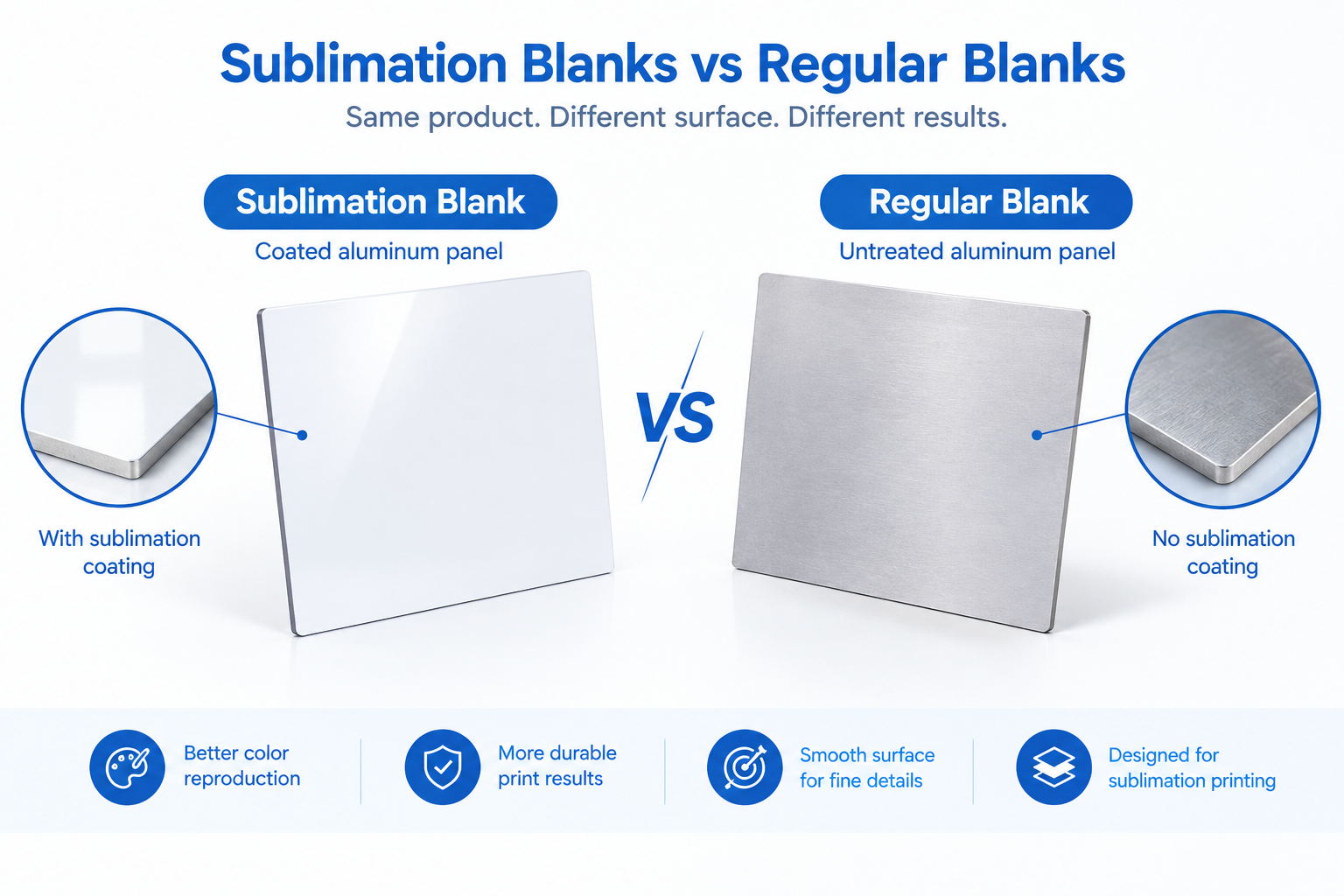
A blank product can look perfectly suitable for customization and still produce disappointing sublimation results. A plain aluminum panel, for example, is not automatically a sublimation photo panel, and a fabric mouse pad is not automatically ready for dye-sublimation printing. What matters is whether the surface or material is designed to accept sublimation dye under the recommended transfer conditions.
For print shops, promotional-product suppliers, distributors, and personalization businesses, choosing the right blank affects more than image quality. It can influence production consistency, waste, turnaround time, and the cost of each sellable product.
In this guide, we explain the difference between sublimation blanks and regular blanks, show what to check before ordering, and outline a practical way to test samples before committing to a bulk purchase.
What Are Sublimation Blanks?
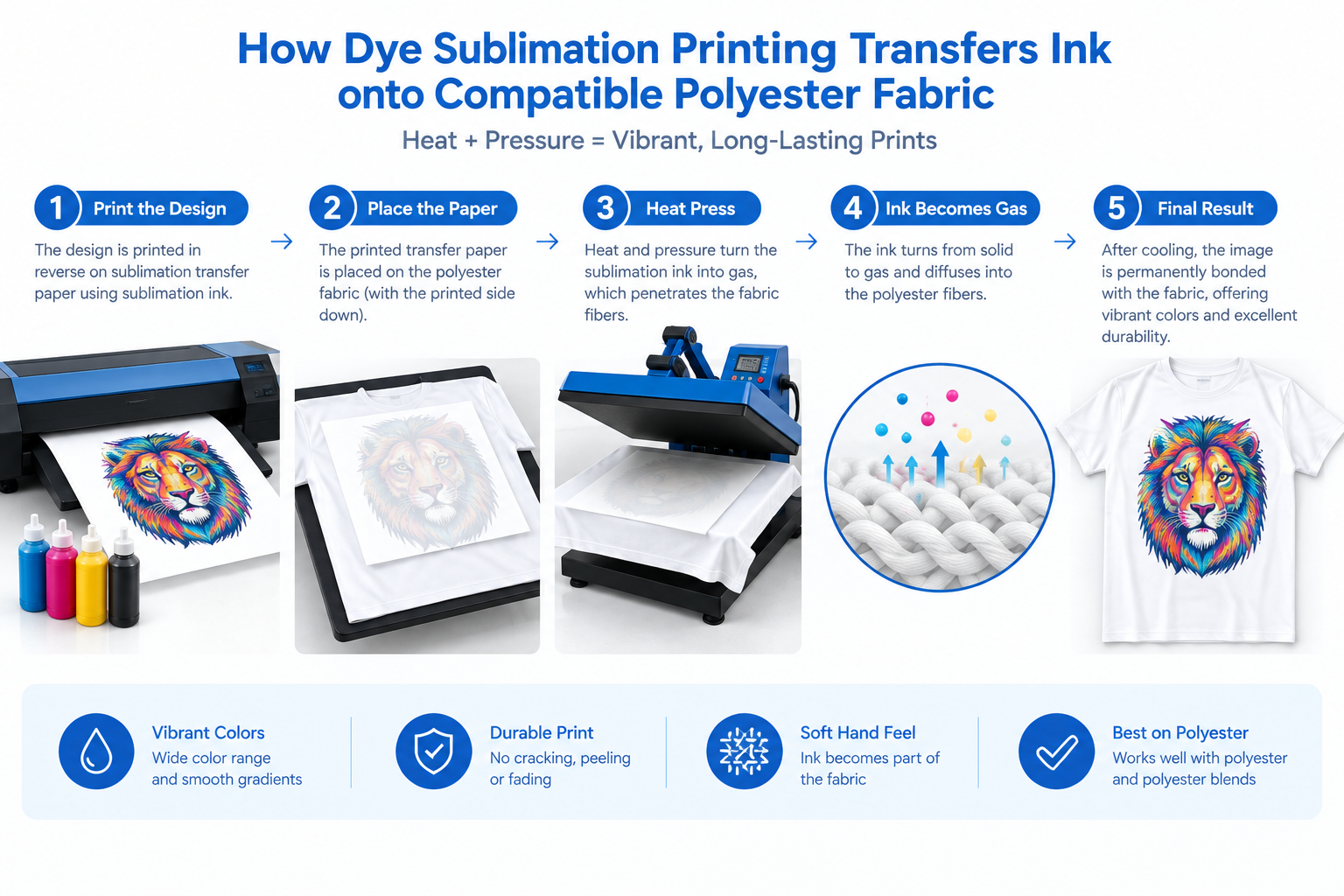 Sublimation blanks are products made with materials or surface treatments intended for dye-sublimation transfer. For polyester textiles, the dye bonds with suitable polyester fibers. For many hard substrates, such as sublimation photo panels and drinkware, a compatible polymer coating is used to receive the dye.
During transfer, heat turns the sublimation dye into gas so it can diffuse into a compatible polyester-based surface. When the product cools, the transferred image becomes part of the receiving surface rather than remaining as a separate adhesive layer, as it would with some other decoration methods.
Common examples include:
- Polyester-rich fabrics designed for sublimation apparel.
- Coated aluminum photo panels for photographic prints, signs, displays, and personalized décor.
- Sublimation mouse pads made with a compatible printable fabric surface and a suitable backing.
- Other products specifically manufactured and tested for sublimation, such as coated drinkware or tiles.
What Are Regular Blanks?
Regular blanks are undecorated products that are not necessarily manufactured for sublimation. “Blank” simply means that a product has not yet been printed or decorated; it does not confirm that the surface is sublimation-compatible.
Examples may include:
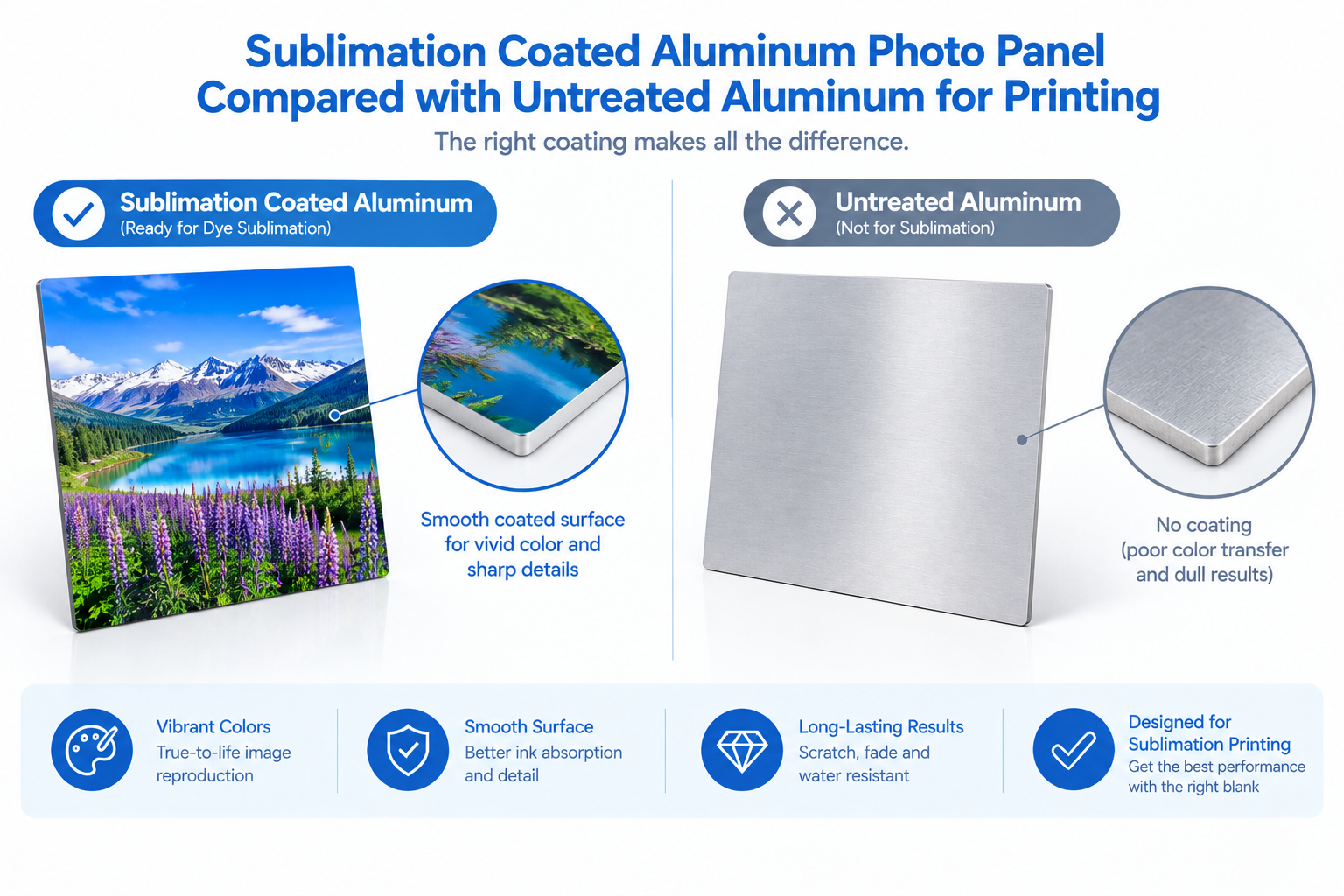
- Untreated aluminum sheet without a compatible sublimation coating.
- A standard ceramic mug without a suitable sublimation coating.
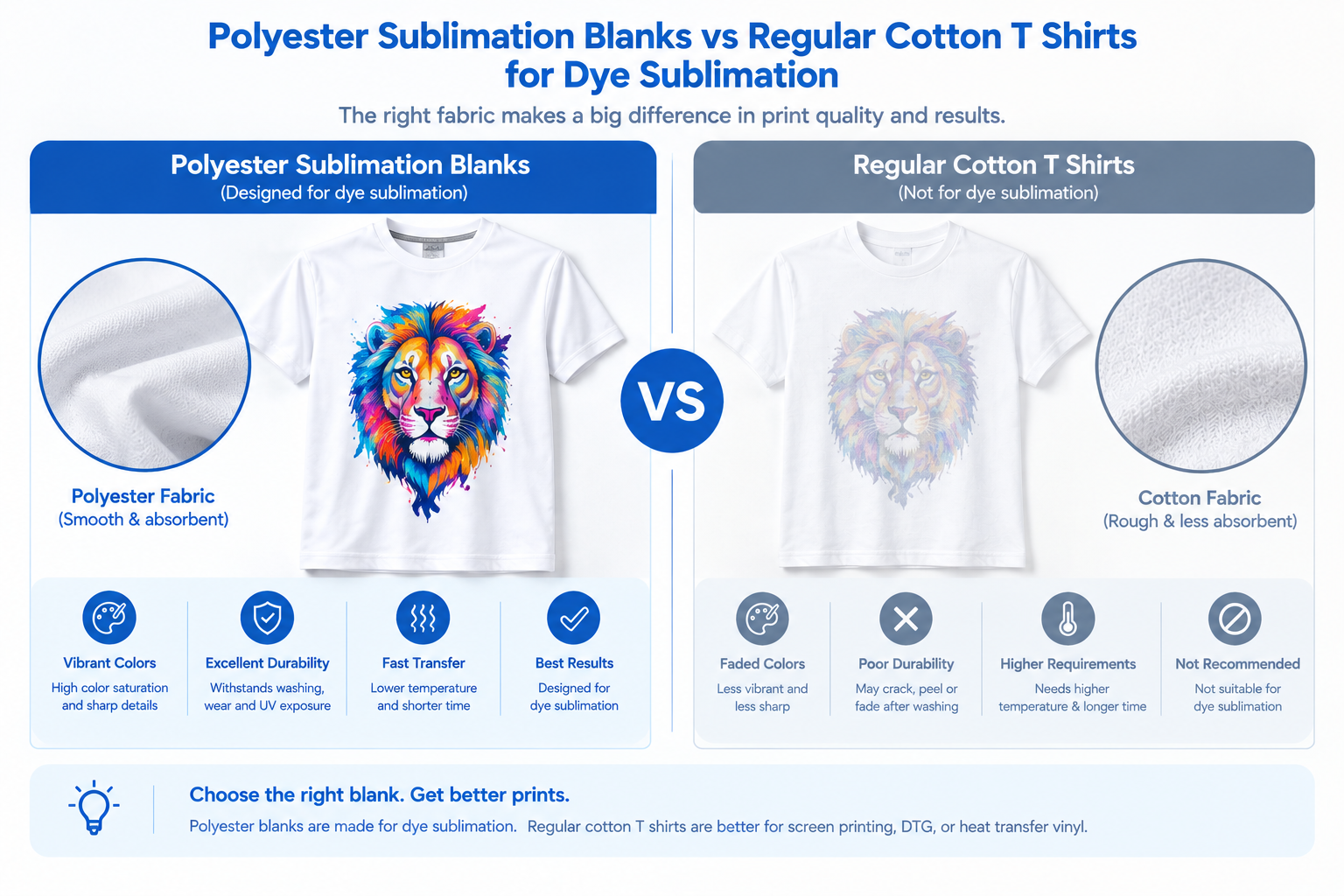
- A cotton T-shirt that has not been specially prepared for sublimation.
- A generic mouse pad whose top fabric or surface has not been confirmed for sublimation printing.
These products may be suitable for other decoration methods, including screen printing, direct-to-film transfers, vinyl, paint, or conventional ink printing. The correct method depends on the substrate and the product specification.
Sublimation Blanks vs. Regular Blanks: 6 Key Differences
1. Material and Surface Preparation
The key difference is not whether a product looks white, smooth, or glossy. It is whether its material and receiving surface are compatible with sublimation dye. For hard goods, check whether the product has a suitable sublimation coating. For fabric products, check the fiber composition and confirm that the item is designed for sublimation.
2. Print Quality and Color Appearance
A suitable blank can support clearer details and more consistent color transfer when paired with compatible ink, transfer paper, equipment, and settings. An unsuitable or inconsistent surface may produce weak, uneven, or poorly defined results. Color also depends on the substrate color: sublimation does not normally print an opaque white layer, so white or light-colored receiving surfaces are generally preferred when accurate color reproduction is required.
3. Durability Depends on the Complete System
A properly transferred image on a compatible substrate can be durable, but durability should not be assumed from the word “sublimation” alone. Results depend on the blank’s construction and coating, the transfer process, intended use, and any exposure to washing, abrasion, sunlight, moisture, or cleaning chemicals. For claims such as dishwasher resistance, UV resistance, or a specific number of wash cycles, ask for product-specific test evidence.
4. Heat-Transfer Compatibility
Sublimation requires a suitable combination of temperature, time, pressure, ink, and receiving material. A regular blank may discolor, deform, or fail to accept the dye under the same conditions. Always follow the blank supplier’s instructions and test a sample before production.
5. Consistency Across Products and Batches
For businesses producing customized items at scale, repeatability matters. Variations in coating, fabric, surface finish, or product construction can lead to inconsistent results between items or batches. Ask suppliers how products are inspected and whether a sample can be approved from the production batch intended for your order.
6. Total Cost, Not Just Unit Price
A lower unit price does not always mean a lower cost per sellable product. If a blank causes failed transfers, reprints, additional labor, delays, or customer returns, the initial savings may disappear. Compare suppliers using sample results, consistency, defect rates, and the full cost of producing an acceptable finished item—not price alone.
Quick Comparison Table
| Factor | Sublimation blank | Regular blank |
| Intended use | Designed or specified for sublimation | Not necessarily designed for sublimation |
| Receiving surface | Compatible fibers or suitable coating | May lack compatible fibers or coating |
| Print outcome | Can produce clear, durable results when correctly processed | May produce weak, uneven, or no effective transfer |
| Heat response | Specified for the intended transfer process | Heat tolerance and compatibility may be unknown |
| Quality verification | Should have product specifications and sample-test results | Requires confirmation before sublimation use |
| Bulk purchasing | Evaluate consistency, inspection, and batch approval | Do not assume suitability based on appearance or price |
Can You Use Regular Blanks for Sublimation?
Sometimes a regular-looking product may work because it has a suitable coating or has been specially treated—but its appearance alone cannot confirm this. An untreated substrate that lacks a compatible receiving surface will generally not produce the expected sublimation result.
Before using a product for sublimation, check its specification or ask the supplier to confirm its intended decoration method. If the information is unclear, order samples and run a controlled test. Do not assume that changing the press temperature or time will make an incompatible surface suitable.
How to Identify a Suitable Sublimation Blank
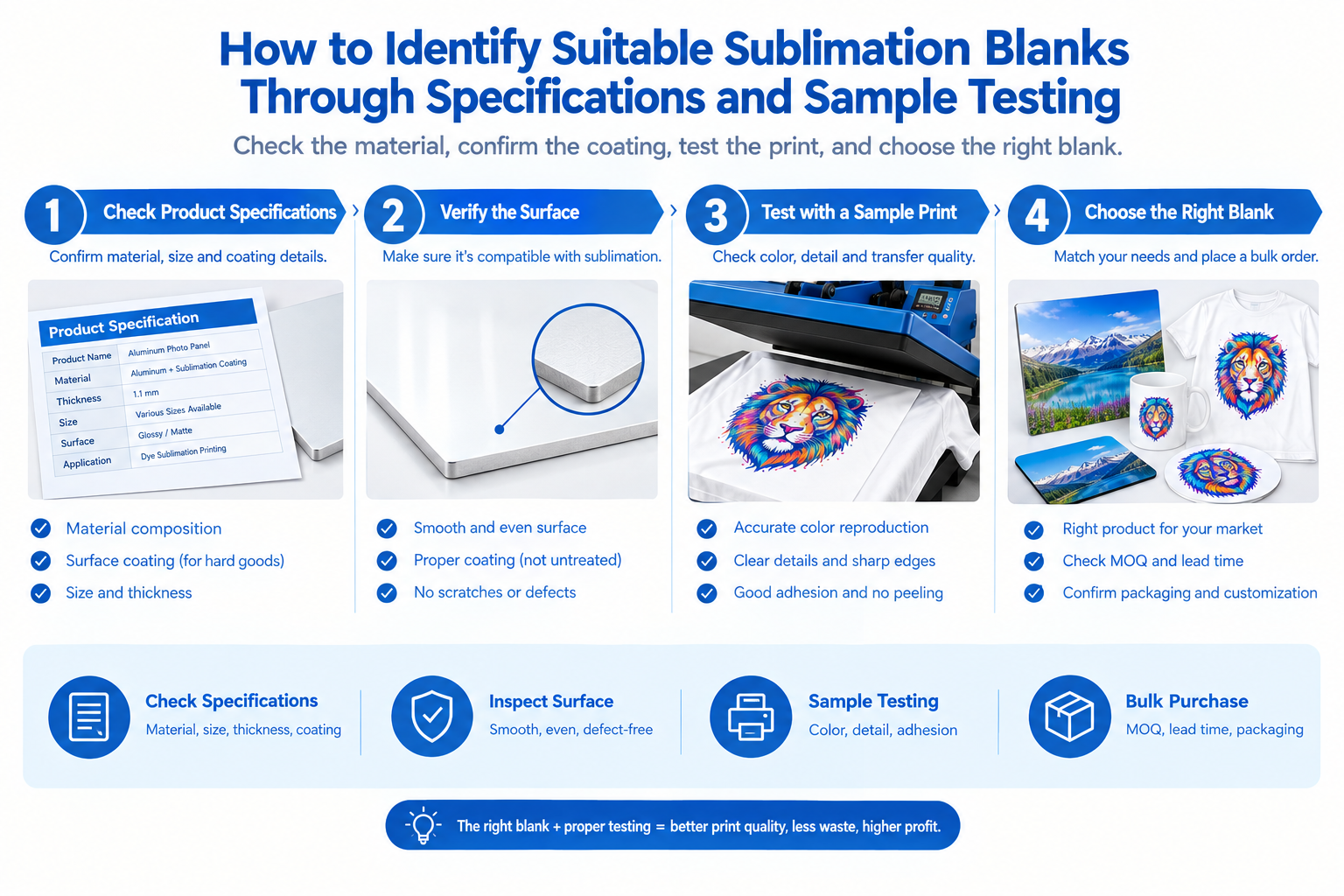
Step 1: Read the Product Specification
Look for clear wording such as “for dye-sublimation” or “sublimation coated.” Confirm the exact model, material, surface finish, thickness or size where applicable, and recommended transfer conditions. A generic “blank” label is not enough.
Step 2: Confirm the Material and Surface
For fabrics, check the fiber composition and whether the product is intended for sublimation. For hard goods, confirm the presence of a compatible coating rather than relying on color or gloss. A white surface is useful for color reproduction, but whiteness alone does not prove sublimation compatibility.
Step 3: Ask for Quality-Control Information
For wholesale orders, ask what checks are performed, how product consistency is evaluated, and whether the supplier can provide relevant specifications or inspection records. The right quality indicators vary by substrate, so a single coating-thickness number should not be treated as a universal standard for every type of blank.
Step 4: Test a Representative Sample
- Use the ink, paper, equipment, and transfer settings recommended for the product.
- Check color appearance, fine details, edge definition, and surface uniformity.
- Inspect the product after transfer for discoloration, warping, coating damage, or other visible defects.
- Run durability tests appropriate to the intended use—for example, washing for suitable textiles or cleaning and abrasion checks for hard goods.
- Record the settings and results so future batches can be compared against the approved sample.
Step 5: Confirm Batch Consistency Before Bulk Production
A successful sample is a useful first check, but it does not by itself prove that every future batch will perform identically. For larger orders, agree on the approved sample, relevant acceptance criteria, packaging requirements, and the process for addressing nonconforming goods.
Sublimation Blanks: Product Types and Applications
Our sublimation blanks range includes sublimation photo panels and blank sublimation mouse pads. These products serve different customization needs, so buyers should match the substrate and surface to the intended application.
1.Sublimation Photo Panels
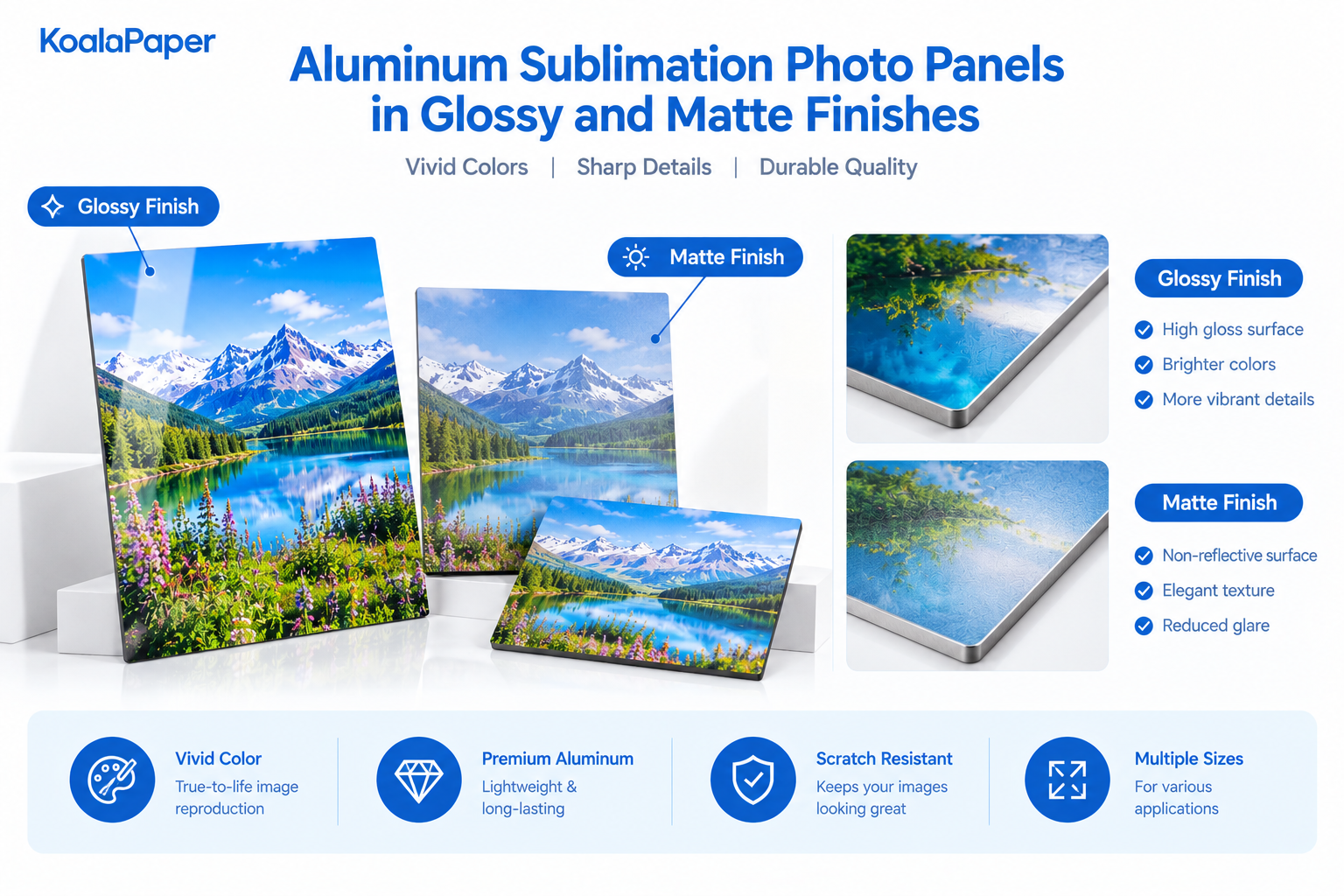
Our lists sublimation photo panels made from aluminum, with glossy or matte surface options and a listed thickness of 1 mm. The product page shows multiple sizes, including 1220 × 1220 mm, 300 × 400 mm, 203 × 254 mm, 96 × 64 mm, and 127 × 178 mm, among others. The page describes applications such as high-definition image displays, exhibitions, window displays, desktop ornaments, and clock faces.
For buyers, the key checks are the required size, preferred finish, intended display environment, and compatibility with the planned transfer workflow. Confirm the exact available specification for the model and order quantity you need.
2.Blank Sublimation Mouse Pads
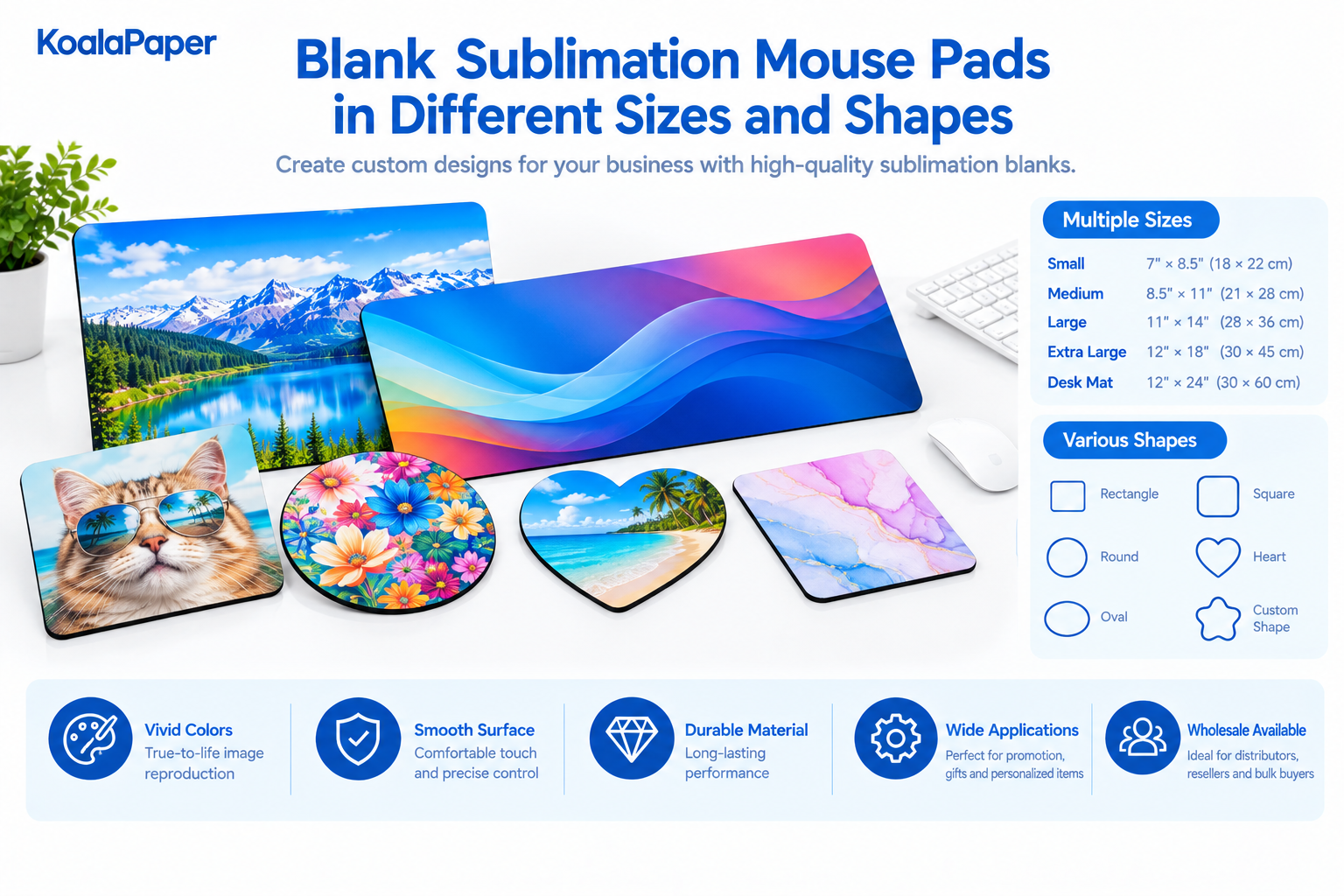 Our lists blank sublimation mouse pads made from rubber and cloth, with 2 mm and 3 mm thickness options. Listed sizes include 200 × 240 mm, 250 × 200 mm, and 300 × 700 mm, among others. The product page also notes support for different corner styles and customized shapes.
These options may suit personalized mouse pads, branded merchandise, office accessories, and gaming-related products. Before ordering, confirm the printable surface, dimensions, thickness, corner style, and any customization requirements for your project.
Product availability and specifications can change. Check the current product page or contact us to confirm the options relevant to your order.
How to Calculate the Real Cost of a Blank
For business purchasing, compare the cost of acceptable finished products rather than the blank’s unit price alone. A simple model is:
Cost per acceptable product = (blank cost + transfer materials + labor + expected rework and waste) ÷ number of acceptable finished products
Use your own production data wherever possible. For a fair comparison, test competing samples under the same conditions and record the number of acceptable results, time required, and any defects. This gives purchasing teams a more reliable basis for comparing suppliers than a headline discount.
Questions to Ask Before Placing a Bulk Order
- Is this exact product model designed and tested for sublimation?
- What material, surface finish, dimensions, and thickness are available?
- What transfer settings and equipment does the supplier recommend?
- What quality checks are performed, and what documentation can be provided?
- Can I test a sample before ordering?
- Can the production batch be checked against an approved sample?
- What packaging, customization, or OEM options are available?
- What are the MOQ, lead time, and process for handling quality issues?
Final Takeaway
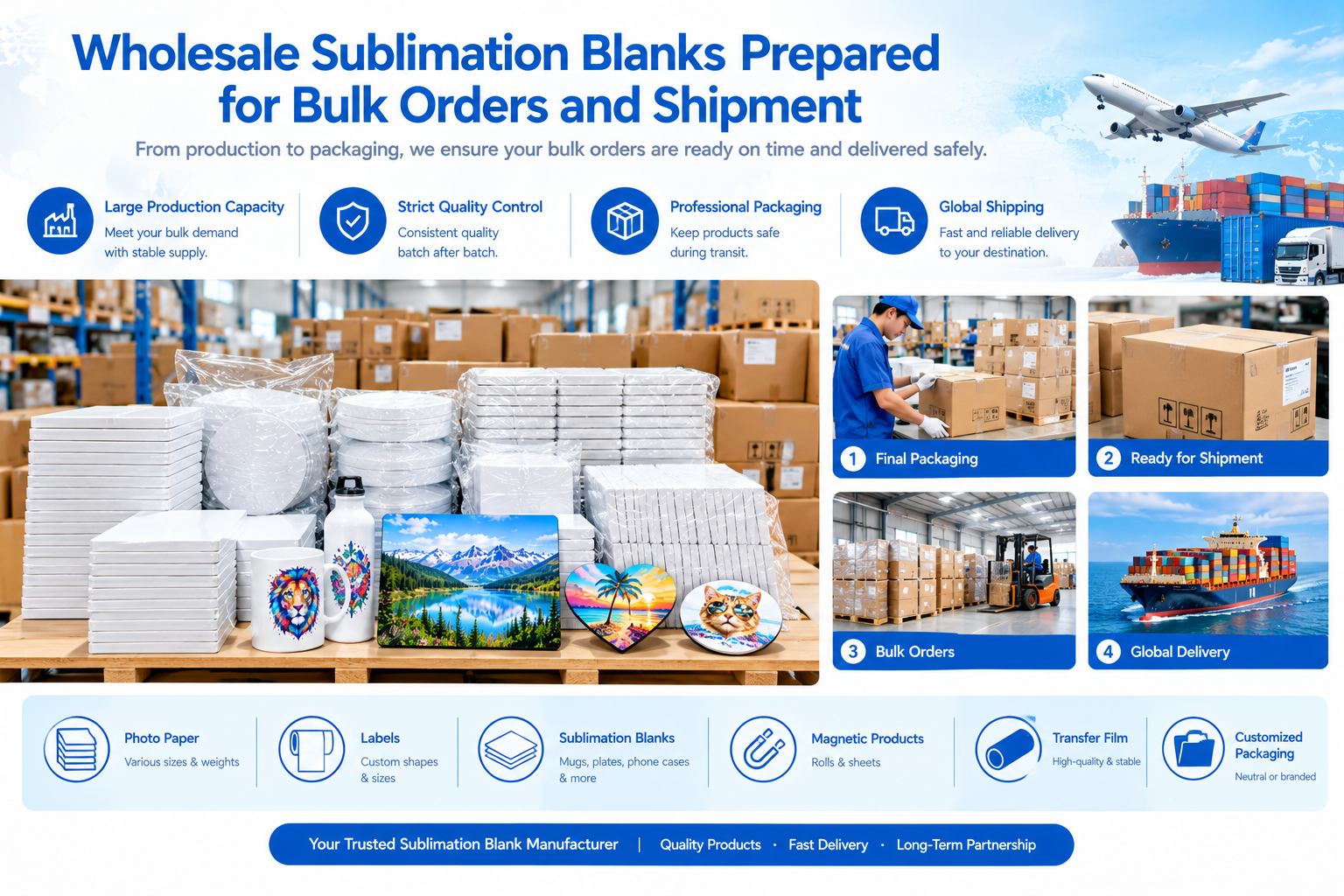
Sublimation blanks and regular blanks are not interchangeable by default. The most important difference is whether the product’s material and receiving surface are suitable for dye-sublimation—not whether the product looks blank, white, smooth, or inexpensive.
For reliable results, verify the product specification, test samples under controlled conditions, and assess quality consistency before placing a bulk order. For photo panels and mouse pads, confirm the exact material, surface, size, thickness, and customization requirements for your application.
Explore Our sublimation blanks range or contact the team to discuss samples, product specifications, and wholesale requirements.
Can I sublimate on any white product?
No. White color does not prove compatibility. The material or surface must be suitable for sublimation, so check the specification and test a sample.
Can I sublimate on untreated aluminum?
Untreated aluminum is generally not suitable for standard dye-sublimation transfer without a compatible receiving coating. Choose a product specifically specified for sublimation.
Can I use a regular cotton T-shirt for sublimation?
Standard sublimation works best on suitable polyester fibers. A regular cotton T-shirt will not normally produce the same durable, vibrant result as a polyester garment unless it has a suitable specialized treatment or transfer system.
Are all sublimation blanks equally durable?
No. Durability depends on the product construction, coating or fiber, transfer settings, and intended use. Ask for relevant test information instead of assuming every blank has the same performance.
How can I check sublimation blank quality before bulk ordering?
Review the specification, request samples, run controlled transfer tests, inspect the results, and agree on acceptance criteria for the production batch.
What sublimation blanks does we offer?
Our sublimation blanks page lists aluminum sublimation photo panels and rubber-and-cloth sublimation mouse pads, with multiple sizes and options. Contact KoalaPaper to confirm current specifications and availability.
Can I request customized sublimation blanks for wholesale orders?
Customization options depend on the product and order requirements. Share your target size, finish, shape, quantity, and packaging needs with the Our team for confirmation.