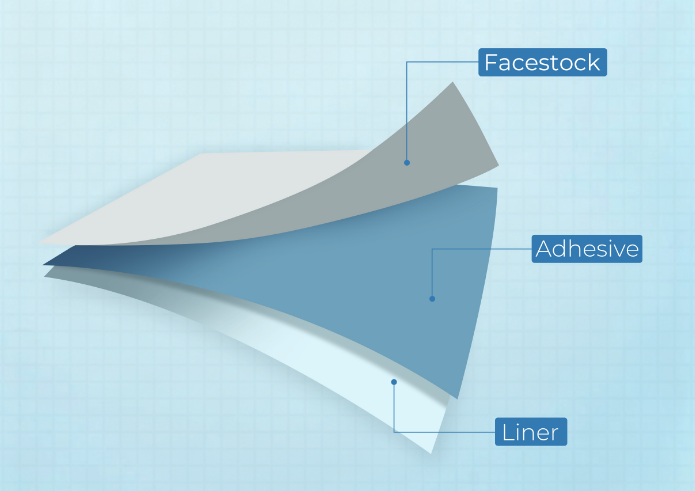
Self-adhesive paper labels are typically made from three main components: a paper facestock, an adhesive layer, and a release liner. Common paper facestocks include writing paper, coated paper, and glassine paper. Each material offers different surface properties, printing performance, and appearance, making it suitable for different labeling requirements.
For businesses purchasing self-adhesive labels in bulk, understanding these material differences can help with product selection, printing compatibility, and application performance.
What Are Self-Adhesive Paper Labels Made Of?
A self-adhesive paper label is a layered material rather than simply a piece of paper with glue on the back.
A typical construction consists of:
Paper Facestock → Adhesive → Release Liner
Each layer has a specific function.
Paper Facestock
The facestock is the visible top layer of the label. It is the surface that receives printed text, graphics, barcodes, logos, or product information.
The type of paper used as the facestock affects:
●Surface smoothness
●Print quality
●Ink absorption
●Color reproduction
●Writing performance
●Overall label appearance
Common paper facestocks include writing paper, coated paper, and glassine paper.
Adhesive
The adhesive bonds the label to the target surface. Depending on the application, a label may use permanent or removable adhesive.
Adhesive selection should take into account:
●Target surface
●Required bonding strength
●Application temperature
●Storage conditions
●Expected service period
●Whether the label needs to be removed
Release Liner
The release liner protects the adhesive before the label is applied. It normally has a release coating, such as a silicone-based coating, which allows the label to be peeled away smoothly.
For labels supplied in sheets or rolls, the liner can also affect feeding, die-cutting, dispensing, and converting performance.
What Types of Paper Are Used for Self-Adhesive Labels?
Three common paper materials used for self-adhesive labels are writing paper, coated paper, and glassine paper. Each has different surface characteristics and is suitable for different printing and labeling needs.
Writing Paper: A natural, relatively uncoated surface suitable for general labeling and writing.
Coated Paper: A smooth, treated surface designed for clear printing and good color reproduction.
Glassine Paper: A smooth, dense, translucent material with a distinctive appearance.
The right choice depends on the label’s intended application, printing requirements, and desired appearance.
What Are Writing Paper Labels?
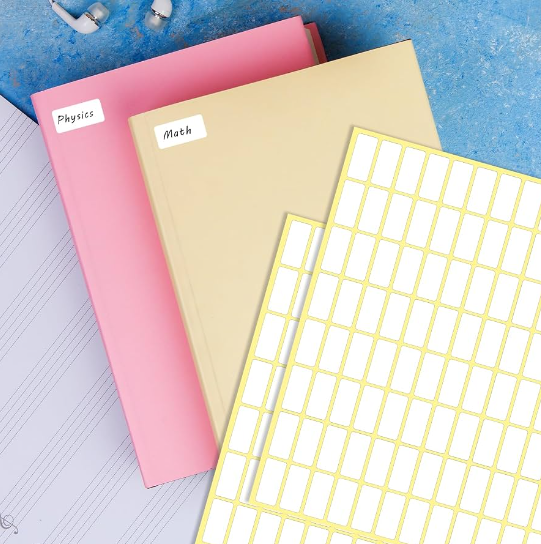
Writing paper labels use a paper facestock designed to provide a practical surface for both labeling and writing.
Compared with glossy or heavily coated materials, writing paper generally has a more natural paper feel. This makes it useful for applications where users may need to add information by hand.
Key Features of Writing Paper Labels
Writing paper labels can provide:
●A natural paper appearance
●A surface suitable for handwriting
●General-purpose printability
●Easy handling
●Versatile application options
They can be considered for product identification, inventory management, office labeling, packaging, and other general-purpose applications.
When Should You Choose Writing Paper Labels?
Writing paper can be a practical choice when handwriting is an important requirement or when a natural paper appearance is preferred.
For example, businesses may use this type of label for:
●Product information
●Inventory and identification labels
●Storage labels
●Packaging
●Office organization
●General-purpose labeling
However, the exact writing and printing performance depends on the paper grade and the type of pen, ink, or printer being used.
What Are Coated Paper Labels?
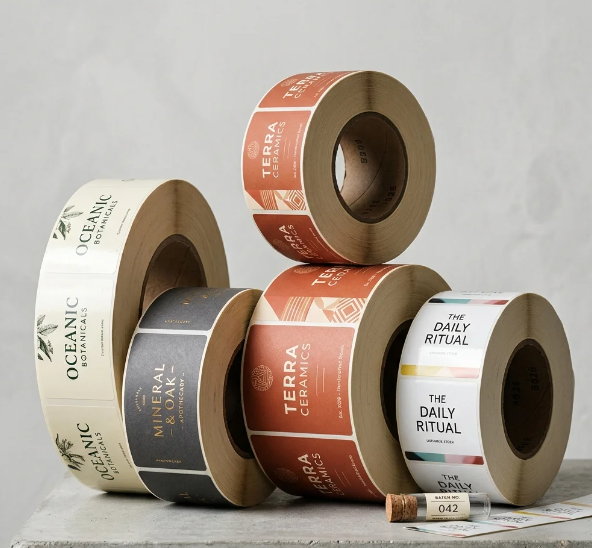
Coated paper labels use a paper facestock with a specially treated surface. The coating creates a smoother and more uniform printing surface than many standard uncoated papers.
This type of self-adhesive paper label is often selected when printed graphics, product images, logos, or fine text need to have a clean and consistent appearance.
Key Features of Coated Paper Labels
Coated paper labels can offer:
●A smooth printing surface
●Clear text and graphics
●Good detail reproduction
●Consistent color appearance
●A more refined visual finish
The coating can influence how ink spreads and is absorbed by the paper. As a result, the specific coating formulation should be matched with the intended printing system.
When Should You Choose Coated Paper Labels?
Coated paper labels can be considered for applications where printed presentation is a priority.
Common applications include:
●Product packaging
●Retail labels
●Promotional labels
●Product identification
●Brand labels
●Labels containing detailed graphics
For businesses using inkjet or laser printers, sample testing is recommended before placing a large order. The same coated paper may perform differently depending on the printer, ink, toner, and printing settings.
What Are Glassine Paper Labels?
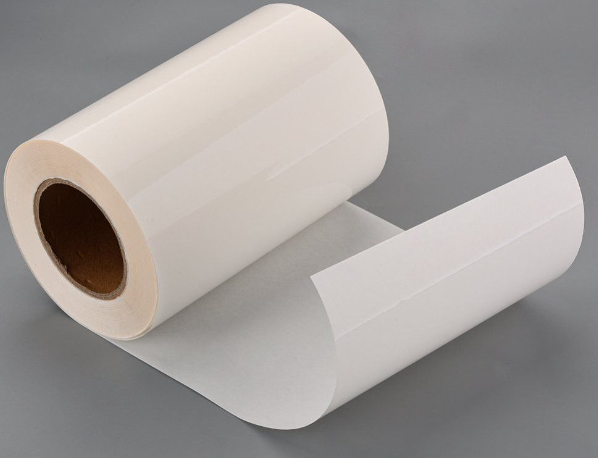
Glassine paper labels use glassine as the facestock. Glassine is a smooth, dense, translucent paper with a distinctive surface appearance.
It is different from conventional writing paper and coated paper because of its material structure and translucent characteristics.
Key Features of Glassine Paper Labels
Glassine paper can provide:
●A very smooth surface
●Dense paper structure
●Translucent appearance
●Uniform surface characteristics
●A distinctive visual effect
Because of these characteristics, glassine may be selected for specialized labeling and packaging applications where material appearance is an important consideration.
When Should You Choose Glassine Paper Labels?
Glassine can be considered when a smooth, dense, and somewhat translucent paper appearance is required.
However, buyers should evaluate the specific glassine grade before production. Printing performance, opacity, adhesive compatibility, and final appearance can vary depending on the material construction.
How Does Paper Material Affect Label Printing?
Choosing the right paper label material is important because the facestock can directly influence printing results.
Even when using the same printer and ink, different paper surfaces can produce different results.
Surface Smoothness
A smoother surface can help improve the definition of fine text, lines, logos, and graphics.
Coated and glassine papers generally have smoother surfaces than conventional writing paper, although actual performance depends on the specific grade.
Ink Absorption
Paper absorbs ink according to its structure and surface treatment.
If ink penetrates too quickly or spreads excessively, printed graphics may lose sharpness. If the surface controls ink absorption effectively, printed details and colors may be more consistent.
Color Reproduction
The paper’s brightness, surface, and coating can affect how printed colors appear.
This is particularly important for labels containing:
●Brand colors
●Product images
●Logos
●Promotional graphics
●Fine color details
For commercial applications, buyers should evaluate printed samples rather than selecting material based only on specifications.
Drying and Printing Speed
Ink drying can be affected by the interaction between the ink and paper surface.
When sourcing labels for high-volume printing, it is useful to test the material at the intended printing speed and under actual production conditions.
Printer Compatibility
Not all self-adhesive paper labels are compatible with every printer.
Inkjet and laser printing systems use different printing technologies and have different material requirements. Buyers should therefore confirm compatibility before purchasing labels in bulk.
How Does Adhesive Selection Affect Self-Adhesive Labels?
The paper facestock is only one part of the label construction. The adhesive also has a major effect on application performance.
Permanent Adhesive
Permanent adhesive is intended for applications where the label should remain attached for an extended period.
It may be suitable for:
●Product labels
●Packaging
●Product identification
●Inventory labels
●Long-term labeling
Removable Adhesive
Removable adhesive is designed for applications where the label needs to be removed more easily.
It may be considered for:
●Temporary labeling
●Promotional applications
●Short-term identification
●Repositionable applications
However, “removable” does not mean that the label will perform identically on every surface. Adhesion can be affected by surface material, texture, cleanliness, temperature, humidity, and application conditions.
For commercial applications, testing the complete label construction on the actual target surface is recommended.
Why Does the Release Liner Matter?
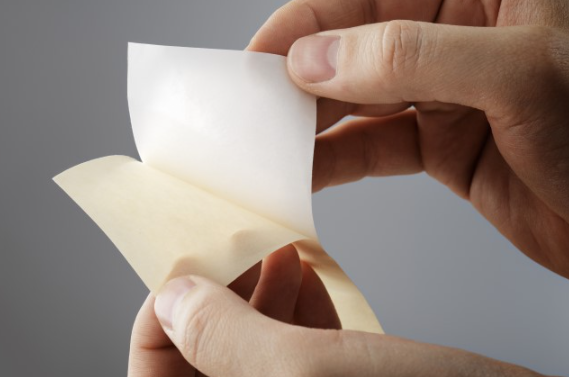
The release liner is often overlooked because it is removed before the label is applied. However, it plays an important role in label manufacturing and handling.
A properly selected liner should allow the label to be released smoothly without damaging the facestock or affecting the adhesive.
For converted or machine-applied labels, liner properties can influence:
●Die-cutting
●Sheet feeding
●Roll converting
●Label peeling
●Automatic dispensing
●Storage
●Handling
For high-volume applications, consistent liner performance can contribute to more reliable processing.
How Do You Choose the Right Paper Label Material?
The right self-adhesive label material depends on the application rather than simply the appearance of the paper.
As a general starting point:
Choose writing paper when:
Handwriting, general-purpose labeling, or a natural paper appearance is important.
Choose coated paper when:
Smooth printing, detailed graphics, and a refined printed appearance are priorities.
Choose glassine when:
A smooth, dense, translucent, and distinctive paper appearance is required.
Before selecting a material for a large order, consider the following factors:
1.What printing method will be used?
2.What type of ink or toner will be used?
3.Does the label need to be writable?
4.What surface will the label be applied to?
5.Should the adhesive be permanent or removable?
6.Will the labels be supplied in sheets or rolls?
7.Are custom dimensions required?
8.What environmental conditions will the labels be exposed to?
9.Does the finished label need to meet specific appearance requirements?
10.Can the material be tested before bulk production?
This approach helps buyers evaluate the complete label rather than choosing a paper facestock in isolation.
What Should Businesses Consider When Sourcing Self-Adhesive Paper Labels?
For bulk purchasing, material selection is only the beginning. Buyers should confirm the complete specification before production.
1. Label Size and Shape
Specify the exact label dimensions, shape, corner radius, spacing, and layout required for your application.
2. Paper Facestock
Confirm the paper type, thickness, surface finish, and printing requirements.
3. Adhesive
Determine whether permanent or removable adhesive is required and whether it is suitable for the target surface.
4. Release Liner
Consider liner thickness, flatness, release performance, and compatibility with the intended converting or dispensing process.
5. Printing Compatibility
Confirm whether the labels are intended for inkjet, laser, or another printing system.
6. Sheet or Roll Format
Choose the format according to your printer, label applicator, converting equipment, and production workflow.
7. Customization
For commercial applications, customization may include:
●Label dimensions
●Material
●Adhesive
●Liner
●Shape
●Packaging
●Sheet or roll format
A supplier should be able to confirm which specifications can be customized according to the order requirements.
8. Sample Testing
Sample testing is particularly important before a large purchase.
A sample allows buyers to evaluate:
●Print quality
●Color reproduction
●Ink drying
●Adhesion
●Label feeding
●Surface appearance
●Peeling performance
Testing the actual label under real application conditions can help reduce the risk of material incompatibility during mass production.
Why Work With an Experienced Self-Adhesive Label Supplier?
Selecting the right label requires more than choosing a paper surface. An experienced supplier can help evaluate the complete combination of facestock, adhesive, and release liner.
For businesses with customized or bulk requirements, supplier support can include:
●Material recommendations
●Custom label sizes
●Printing compatibility testing
●Sample preparation
●Production consistency
●Packaging options
●Technical support
A supplier with experience across different paper and adhesive combinations can help buyers identify a label construction that matches their printing equipment and end application.
With extensive experience in self-adhesive labels, printable label materials, and other printing supplies, Koala provides reliable products, consistent quality, and solutions for a wide range of printing and labeling needs. For businesses looking for a best self-adhesive label supplier, Koala offers a broad selection of materials and specifications to support both standard and customized applications.
Frequently Asked Questions About Self-Adhesive Paper Labels

What materials are used for self-adhesive paper labels?
Self-adhesive paper labels generally consist of three layers: a paper facestock, an adhesive layer, and a release liner. Common paper facestocks include writing paper, coated paper, and glassine paper.
What is the difference between writing paper and coated paper labels?
Writing paper generally has a more natural surface and can be suitable for handwriting and general labeling. Coated paper has a smoother treated surface and is often selected for applications requiring detailed graphics and a more refined printed appearance.
Are coated paper labels suitable for inkjet printing?
Some coated paper labels are specifically designed for inkjet printing, but compatibility depends on the paper coating, ink formulation, and printer. Testing a sample with the intended printer is recommended before bulk purchasing.
What is glassine paper used for in labels?
Glassine is a smooth, dense, translucent paper used in selected labeling and packaging applications. It can be chosen when a distinctive smooth and translucent paper appearance is required.
What are the three layers of a self-adhesive label?
The three main layers are the facestock, adhesive, and release liner. The facestock provides the printable surface, the adhesive attaches the label to the target surface, and the release liner protects the adhesive before application.
How do I choose the right adhesive for a paper label?
Consider the target surface, required adhesion strength, application conditions, expected service period, and whether the label needs to be removed. For specific applications, testing the complete label on the actual substrate is recommended.
Can self-adhesive paper labels be customized?
Yes. Depending on the supplier’s capabilities, labels can be customized by size, shape, paper material, adhesive, liner, and format. Buyers should confirm the available customization options and test samples before bulk production.
Conclusion
The performance of a self-adhesive paper label depends on more than the paper visible on its surface. The facestock, adhesive, and release liner work together to determine printing quality, adhesion, handling, and application performance.
Writing paper, coated paper, and glassine paper each offer different characteristics. Writing paper can be suitable for general labeling and handwriting, coated paper can support smooth and detailed printing, while glassine provides a distinctive smooth and translucent appearance.
For businesses sourcing self-adhesive labels in bulk, the most reliable approach is to evaluate the complete label construction and test samples under actual printing and application conditions.
By considering the paper material, adhesive, liner, printing method, label format, and customization requirements together, buyers can make more informed decisions and find a label solution that fits their production needs.