INTRODUCTION

In the professional sublimation textile printing industry, the difference between Tacky sublimation paper and regular sublimation paper is often confusing. While many novice customers only care about the price difference—expensive versus cheap—experienced manufacturers/distributors/traders understand that the real differences lie in production stability, ghosting control, scalability, and long-term operational efficiency.
This comprehensive comparison guide is designed for textile mills, sportswear manufacturers, sublimation paper distributors, and professional printers who want a complete understanding of the performance of viscous and regular sublimation paper in real-world production environments.
In the competitive textile market, even defect reduction and improved paper performance can significantly enhance profitability. The choice of the right paper directly impacts the final result.
Chapter 1: The Principle of Dye Sublimation Transfer Printing
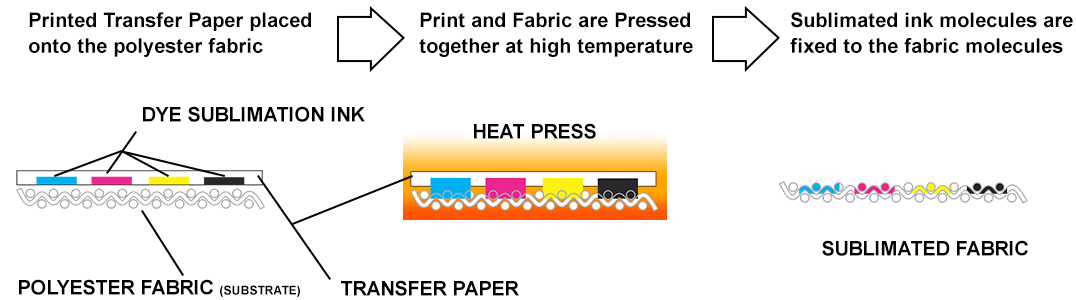
The principle of dye sublimation printing is to transform dispersed dye ink from a solid state to a gaseous state under high temperature and pressure. The gaseous dye permeates into the polyester fibers and binds to them at the molecular level.
The transfer paper, as the carrier of sublimation ink, has the following functions:
- Precisely fixes ink droplets after printing
- Achieves rapid surface drying
- Efficiently releases ink during the heat transfer process
- Maintains image integrity under pressure
- Minimizes deformation or displacement
The coating structure, porosity, moisture content, and release chemistry properties collectively determine the performance of dye sublimation paper.
In mass textile production, the consistency of sublimation transfer paper is crucial; it is not optional.
Chapter 2: What is Regular Sublimation Paper ?
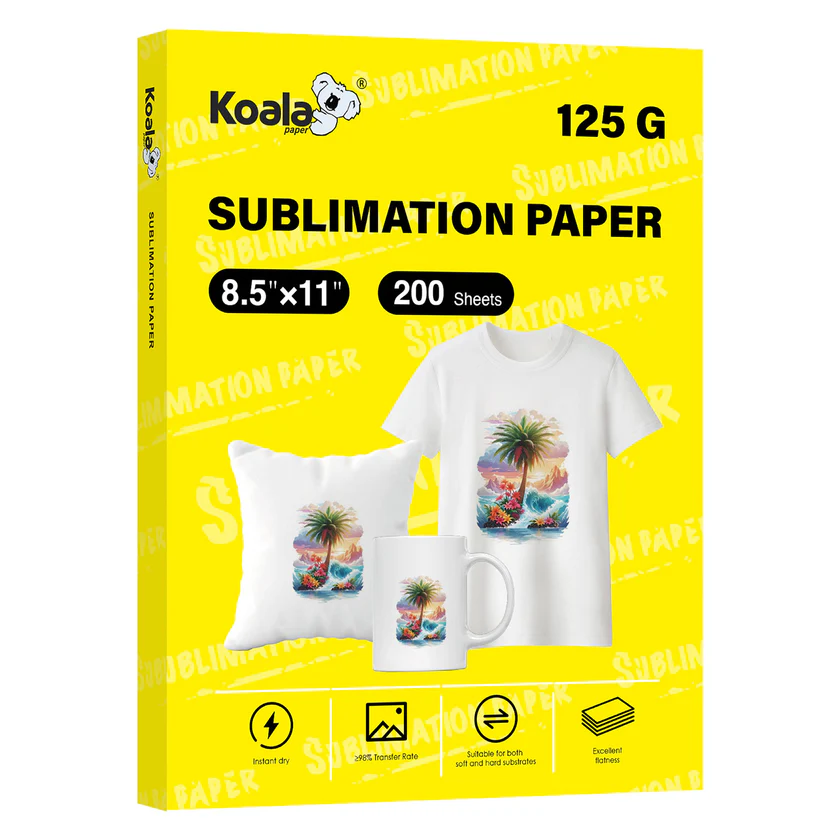
Regular sublimation paper is a high-performance coated transfer paper designed for strong ink retention and fast drying. It contains no binder components.
Typical Characteristics:
- Transfer efficiency: 98%
- Fast ink absorption
- Smooth surface coating
- Compatible with sheet and roll-to-roll printing systems
- Affordable, suitable for personalized printing
Common Applications:
- Ceramic mugs
- Aluminum photo plates
- Promotional items
- Durable polyester T-shirts
- Hard-coated substrates
Advantages:
- Lower material costs
- Suitable for rigid substrates
- Easy to handle
- Wide range of applications
Limitations:
Regular sublimation paper adheres freely to the surface during heat transfer and does not stick to fabric. If the fabric expands or shifts, the image will also move.
Chapter 3: What is Sticky Sublimation Paper ?
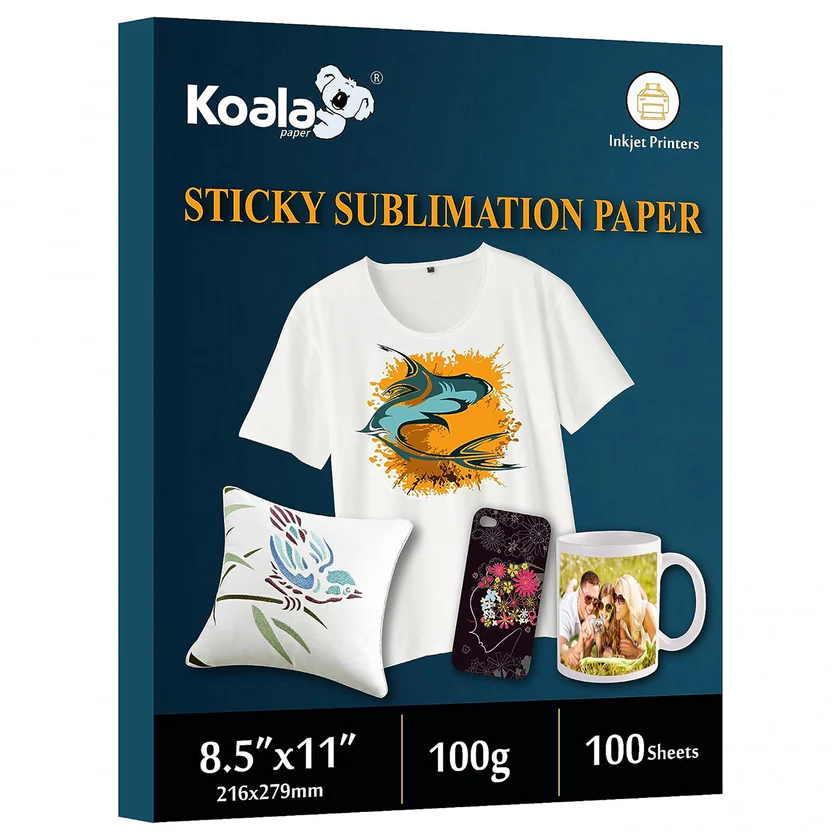
Sticky sublimation paper has an adhesive layer added to its coating.
During the hot-pressing process (typically 180–200°C), the adhesive melts, causing the paper to slightly bond with the polyester fabric. After the hot-pressing process, the temperature drops, and the paper can be easily peeled off without residue.
Key Advantages:
- Prevents micro-displacement
Reduces ghosting
Improves edge sharpness
Enhances high-speed stability
Supports industrial textile workflows
Main Applications:
- Sportswear
Compression wear
Stretch polyester fabrics
Roll-to-roll calendering
High-speed textile production
Chapter 4: Understanding Ghosting
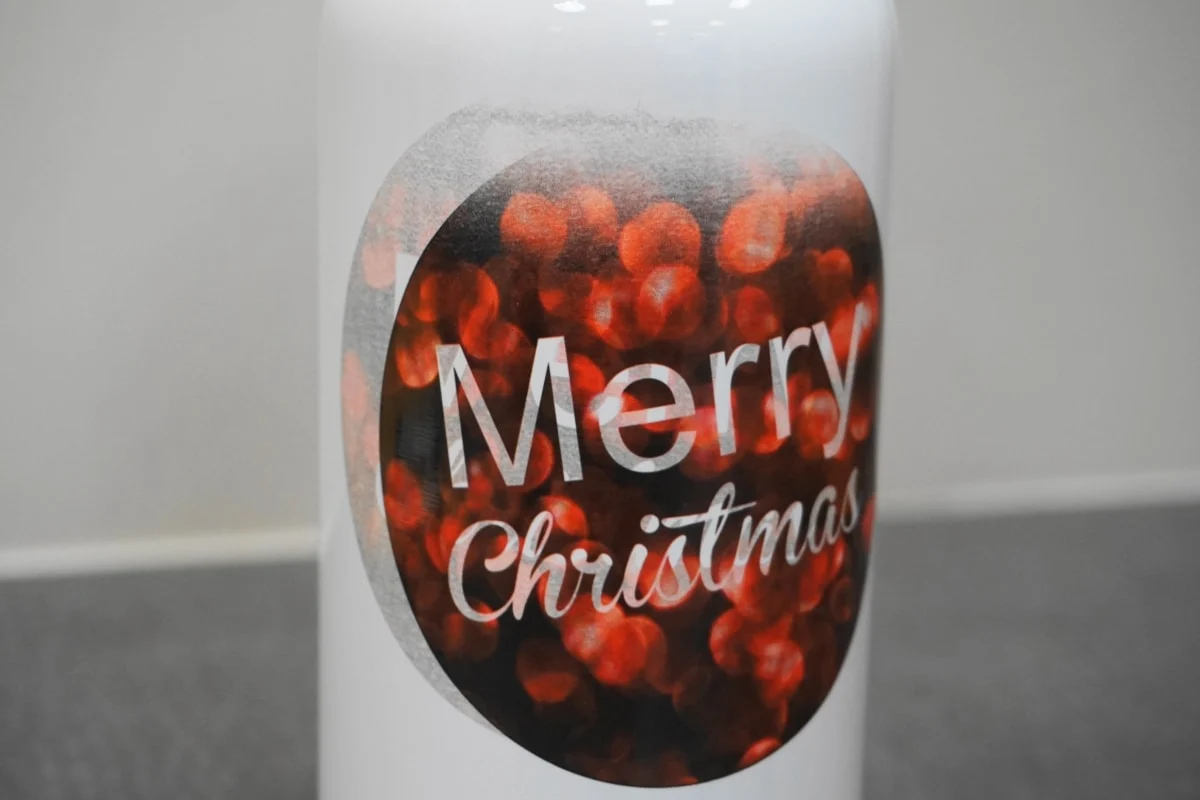
Image ghosting refers to the ghosting or shadowing effect of a pattern caused by paper movement during heat transfer.
Root Causes:
- Thermal expansion of the fabric
- Mechanical vibration of the heat press machine
- Airflow turbulence
- Static electricity
- Operator positioning errors
- Uneven pressure distribution
Even slight displacement can ruin fine text, signs, and clear graphics.
Ordinary sublimation paper cannot avoid the effects of these factors.
Sticky sublimation paper stabilizes paper-to-paper contact during the critical stage of dye migration.
Chapter 5: Adhesive Activation Engineering
High-quality adhesive sublimation paper undergoes a carefully designed coating structure to balance the following:
- Activation temperature range
- Adhesive strength
- Peelability
- Transfer rate retention
If the adhesive strength is too weak → the pattern will continue to shift.
If the adhesive strength is too strong → the paper may be difficult to peel off easily.
Precise coating control ensures stable adhesion without compromising peelability.
Chapter 6: The Reality of Sportswear Printing

Modern sportswear fabrics are lightweight, breathable, and elastic, and expand when heated. This expansion during ironing increases the likelihood of ghosting in the print.
Adhesive sublimation paper provides crucial stability for the following products:
- Soccer jerseys
- Basketball jerseys
- Cycling jerseys
- Running jerseys
- Yoga jerseys
- Esports jerseys
For global apparel brands, print accuracy determines consumers' perception of garment quality.
Chapter 7: Heat Press Systems for Industrial Machines
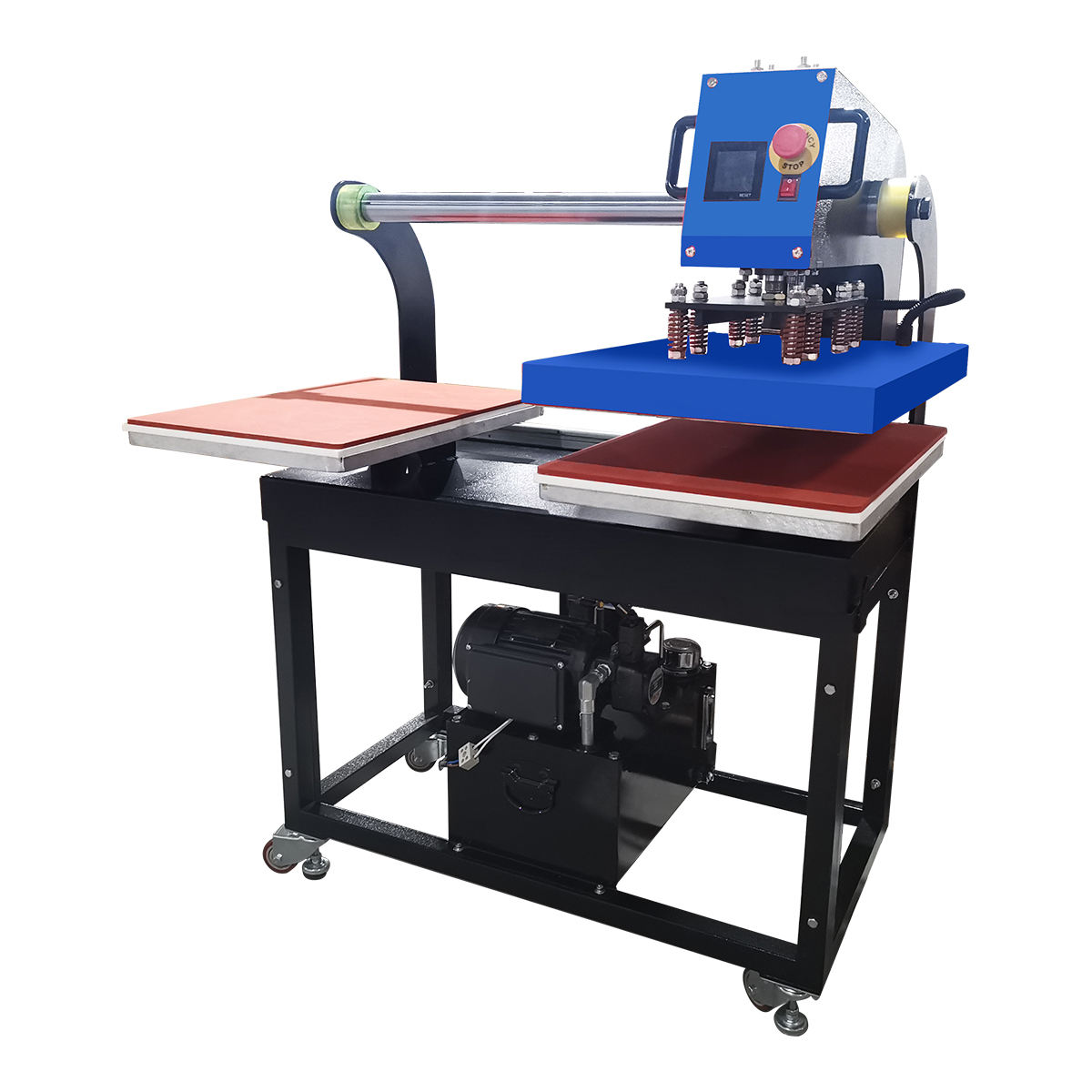
Industrial textile mills typically use roll-to-roll calenders that operate 24/7.
Challenges include:
- Continuous variations in fabric tension
- High-speed feeding systems
- Air displacement
- Mechanical vibration
- Fatigue from prolonged operation
Regular sublimation paper may require reduced speeds to maintain quality.
Viscous sublimation paper can improve production efficiency and first-pass yield.
Even small improvements in yield can significantly impact annual profitability.
Chapter 8: Tacky Sheets vs. Rolls – The Flexibility of Our Sublimation Paper Plant
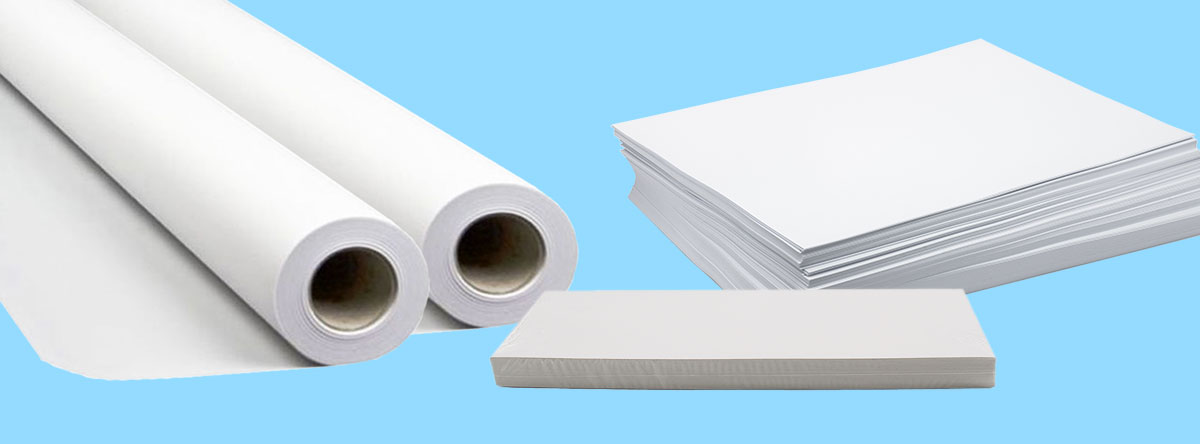
Most Tacky sublimation paper worldwide is distributed in roll form.
However, many manufacturers require sheet sublimation paper for:
• Sample making
• Small-batch custom garment production
• Flatbed press operation
• Regional production workshops
• Design studios
Inconsistent production can occur when sheets and rolls use different coating systems.
Our sublimation paper sheets and rolls, using a unified coating formulation, achieve:
• Seamless scaling
• Unified color management
• Simplified inventory management
• Reduced recalibration
• Consistent cross-specification performance
This production flexibility becomes a competitive advantage.
Chapter 9: Relevant Color Clarity and Transfer Rate
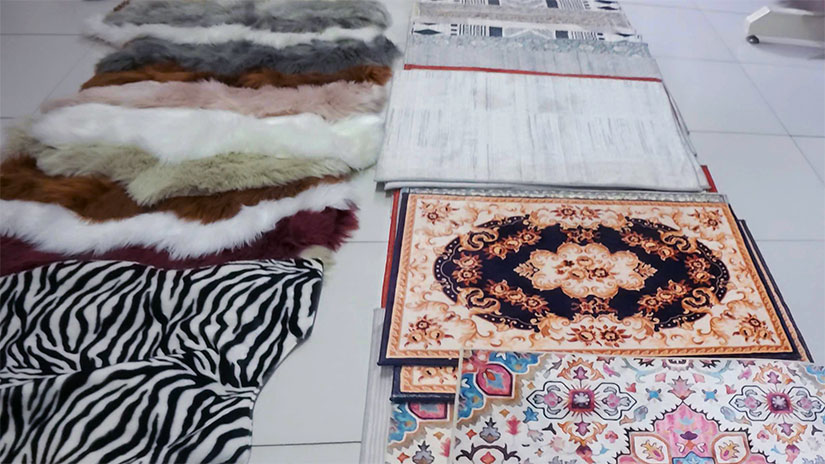
Color vibrancy primarily depends on the composition of the ink and polyester fibers. However, paper stability affects edge sharpness and clarity. Adhesive sublimation paper maintains stable contact, thus improving image accuracy. The transfer rate of our factory's Adhesive sublimation paper is comparable to that of high-quality regular sublimation paper.
Chapter 10: Humidity, Storage, and Environmental Control

Both regular sublimation paper and Tacky sublimation paper are sensitive to humidity.
High humidity can cause:
- Curling
- Uneven ink drying
- Uneven coating
Professional storage recommendations:
- Relative humidity 40–60%
- Lay flat
- Sealed packaging
- Avoid direct sunlight
A balanced production process enhances the paper's stability across different climate zones.
Chapter 11: Cost Analysis

Comparing material prices alone can be misleading.
Hidden costs include:
- Fabric waste
- Manual reprinting time
- Machine downtime
- Missed delivery deadlines
- Quality claims
- Damaged brand reputation
For high-volume sportswear production, even a 2-3% reduction in defect rates can offset significant paper costs.
In demanding production environments, Sticky sublimation paper typically offers higher profit margins.
Chapter 12: When to Use Regular Sublimation Paper
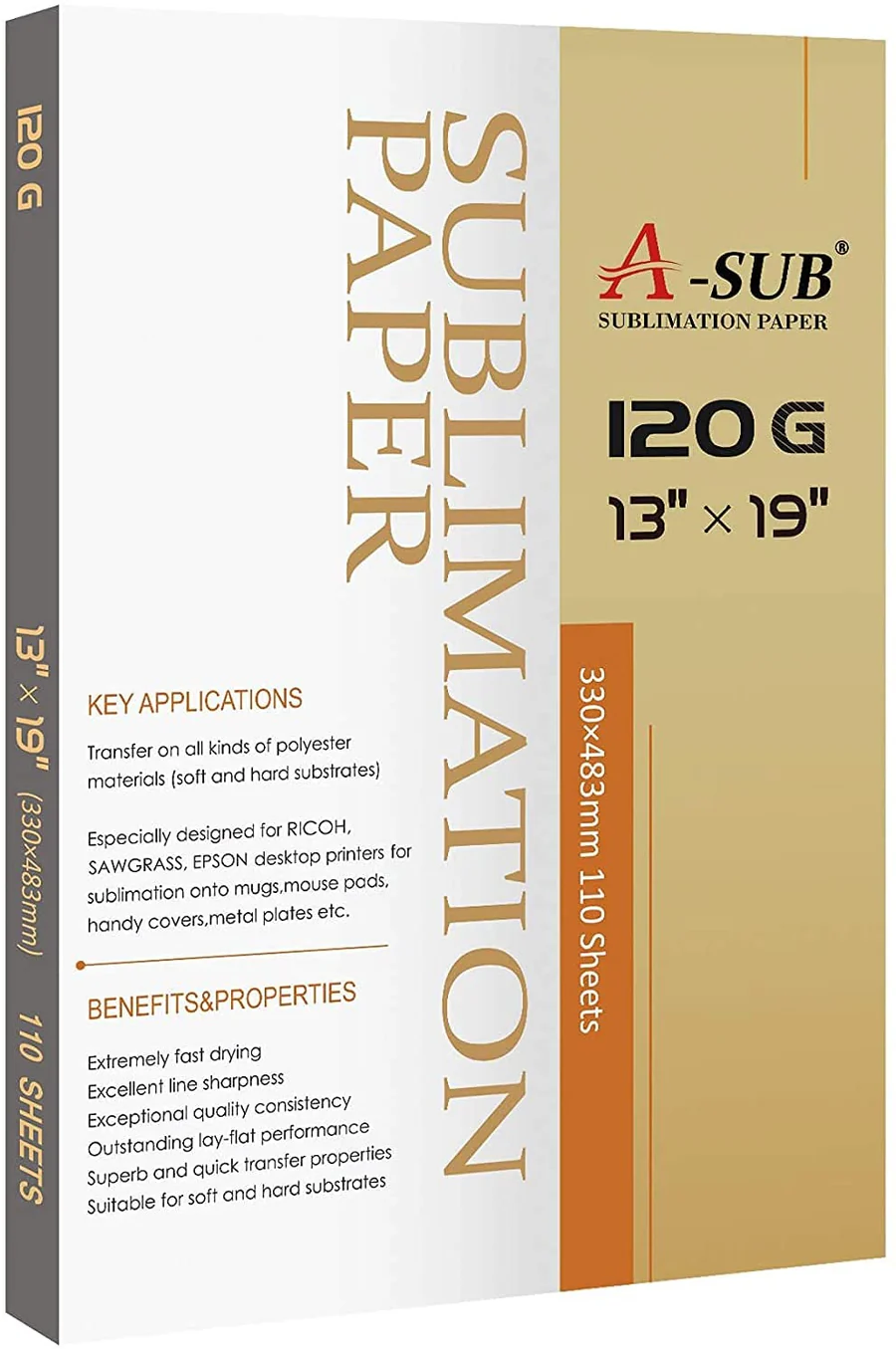
Regular sublimation paper remains the best choice for:
- Rigid coated products
- Promotional printing
- Stable polyester fabrics
- Startups with limited budgets
- Low-speed production
It continues to effectively serve most segments of the sublimation market (personalized customization).
Chapter 13: When to Use Adhesive Sublimation Paper

Adhesive sublimation paper becomes the preferred solution for:
- Printing on stretch fabrics
- Running industrial calendering systems
- Scaling up from samples to mass production
- Managing mixed sheet and roll workflows
- Prioritizing defect reduction
In these cases, stability equates to profitability.
FINAL CONCLUSION
The choice between tacky sublimation paper and regular sublimation paper depends on production demands, fabric type, and operational goals.
Regular sublimation paper remains effective for rigid substrates and stable polyester fabrics.
Tacky sublimation paper provides enhanced ghosting prevention, scalability, and industrial stability for modern textile manufacturing.
In competitive markets, production stability is not a luxury—it is a strategic necessity.
Primarily for sportswear and elastic polyester printing?
It provides superior stability in stretch fabric applications.
Can I use regular sublimation paper on spandex?
Movement risk increases; tacky paper is recommended.
Does tacky sublimation paper leave residue?
High-quality versions release cleanly.
What temperature activates tacky sublimation paper?
Usually between 180–200°C.
What is the best sublimation paper for sports jerseys?
Tacky sublimation paper.
Can tacky sublimation paper be used for mugs?
Yes, but adhesion is unnecessary.
Why does ghosting occur?
Paper movement during transfer.
Does tacky paper improve color vibrancy?
Improves sharpness; vibrancy depends on ink.
Is tacky sublimation paper more expensive?
Yes, but reduces defect costs.
What is sheet tacky sublimation paper?
Sticky paper in flat sheet format.
What is roll sublimation paper used for?
Continuous textile production.
Which sublimation paper is best for high-speed production?
Tacky sublimation paper.